



The Vikings did not adhere to contemporary notions of gender equality and personal freedom. Their society generally accorded men a higher social status than women, and an individual's value was largely determined by how well they conformed to their gender's expected societal role.
While there were exceptions, with some Norse men and women defying their society's gender norms, a few of them were not necessarily stigmatized by the wider community for their choices.
In matters of marriage, men initiated proposals, and the families of the suitor and the desired bride would convene to negotiate the terms. The prospective bride had minimal input into the process; her family negotiated on her behalf, often with their own interests taking precedence over hers. She was not even given the choice to accept or reject a particular suitor initially.
Adultery was generally condemned for women, and in certain Viking provincial law codes, if a husband caught his wife in an act of adultery, he could legally put both her and her lover to death. While some Viking laws also prescribed penalties for husbands caught in adultery, these were not universal. Moreover, men's extramarital affairs tended to receive less social condemnation than those of women. Notably, it was not uncommon for chieftains and kings to have multiple wives and even concubines. An extreme example is Earl Hakon of Lade in Norway, who purportedly compelled his subjects to send their daughters to him for his pleasure, spending a week or two with each before returning them to their families.
Divorce was prevalent, relatively straightforward, and could be initiated by either the husband or the wife. If a wife initiated divorce due to her husband's wrongdoing, she was entitled to significant financial compensation to ensure her ability to support herself after the separation. This provided a way out for women trapped in unhappy marriages.
However, if a woman aspired to pursuits beyond child-rearing and the physically demanding tasks of maintaining a Viking homestead, she often faced limited opportunities. While men also shared in these arduous tasks, they could often pursue additional or alternative roles if they so chose. In contrast, most women had little to no choice but to embrace the life of a homemaker.

Only men could hold political and legal offices – and only men could speak at legal assemblies and testify as witnesses before a court.
Most importantly in a Viking Age context, however, there’s no evidence that women ever fought in battle; as far as we can tell, this was left entirely to men. Only men could become warriors and travel to lands far from their farms with their warband to fight on behalf of the warband’s leader. The only thing women did on a Viking Age battlefield was flee so they wouldn’t be raped by the victorious army.
(Note: those who believe that a recent archaeological find proves the opposite should see here and here.)
Some people have hoped to find in the warlike valkyries a mythical image of female warriors that had some counterpart in historical reality. But the historical, human counterpart of the valkyries wasn’t female warriors. Rather, it was sorceresses, who used magic with the intent of influencing the outcome of battle but didn’t physically participate in it.
Speaking of magic – and in particular seidr, which was virtually synonymous with Norse magic as such – this was one social role outside of the home that was essentially reserved for women at the exclusion of men. There were men who practiced magic, but they were passionately despised by the wider society, and in some cases were even killed by their own families for the extreme dishonor their practices brought upon their families. This was because magic was seen as tantamount to homosexuality (for reasons that are too complex to go into in an article of this sort), and homosexuality was seen as tantamount to effeminacy and cowardice – traits that were scorned like few others by the macho warrior society of the Viking Age. But since women were already effeminate, and weren’t expected to be as brave as their men, there wasn’t any particular shame in a woman practicing magic. (For a full discussion of this point, see my book The Viking Spirit: An Introduction to Norse Mythology and Religion.)
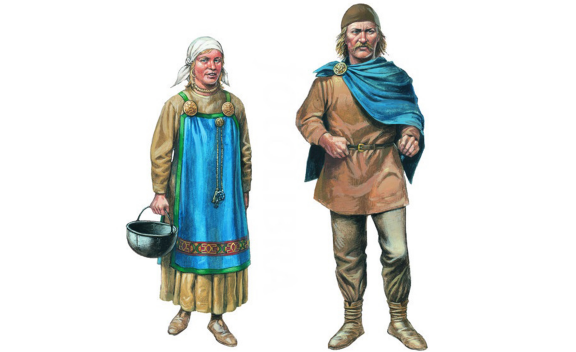
Men and women were both judged based on how well they performed their expected societal roles. For men, this meant being a manly, honorable warrior and/or farmer. For women, this meant excelling at her housekeeping duties. This work wasn’t looked down upon back then in the same way that it so often is in our society, however; the woman who was a capable mother and housewife was genuinely appreciated and held in high regard by her family and by society as a whole, and her work was genuinely valued.
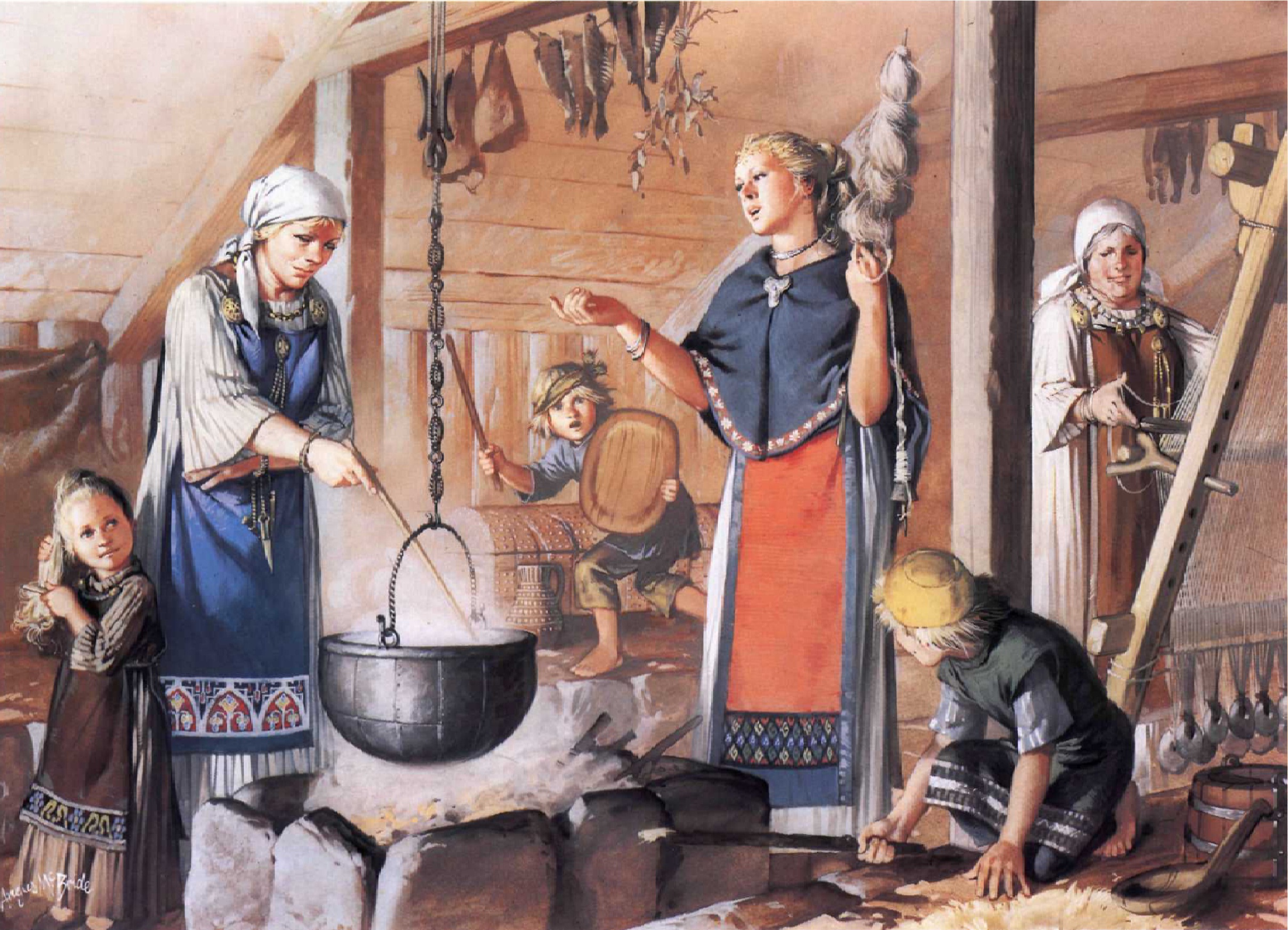
Nevertheless, that rather humble kind of work doesn’t exactly lend itself to the level of prestige and renown that accomplished warriors, explorers, and rulers enjoyed. The deeds of such great men were remembered and celebrated in song, poetry, and runic inscriptions on stone monuments, all of which are proverbial for their ability to stand the test of time and serve as a kind of half-immortality for the commemorated person. The great housewives, however, had no songs sung about them, no poems recited about them, and no monuments erected to them. In the cases where runestones preserve the names of women, those women were simply the ones who had the stones commissioned on behalf of their male relatives.
There were some very high-status women in the Viking Age, even if they generally acquired that status through the passive means of being born into a high-status family or marrying a high-status man. Some of the lavish ship burials that have been discovered by modern archaeologists were women’s graves.
Women could inherit property, but this only occurred in rather exceptional circumstances, such as the death of all suitable male relatives.There were even a few female poets, but that was very uncommon.
Muslim writers of the period who visited Viking society were frequently astonished at the range of volition Scandinavian women enjoyed, especially the right to divorce their husbands. This testifies to the fact that however bad Norse women may have had it – and they certainly had it quite bad in many ways – women in various other societies of the period had it considerably worse.