



Before the Reformation, Counter-Reformation, Witch Trials, and Scientific Revolution, the majority of Europeans lived in a world imbued with enchantment. This enchantment persisted because their Christianity was a syncretic faith that retained many prominent pagan elements. Their religious beliefs were characterized by a fusion of pagan and Christian elements, resulting in a Christianity infused with paganism or a paganism infused with Christianity. In this worldview, God played a significant role as the provider of worldly prosperity, often outweighing His role as the source of salvation from the earthly realm.
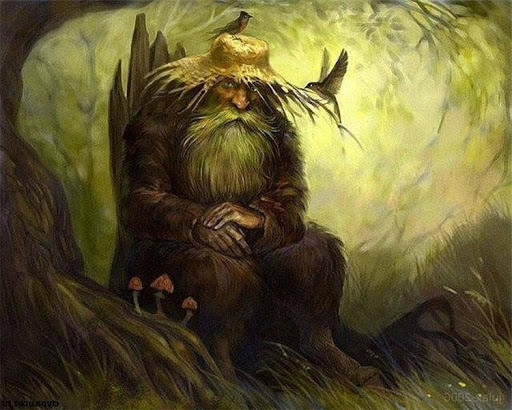
In this enchanted European world, the natural elements—fields, forests, rivers, and mountains—remained inhabited by elves, fairies, and other mysterious spirits. Individual desires and tribal loyalties held more significance than abstract, universal ethics. A comparison between medieval feudalism and the early Christian communities reveals the prioritization of individual and tribal concerns over broader ethical principles, with the latter displaying elements of proto-communism.
Even when Europeans engaged in conflicts and sacrifices for Christianity, as seen in events like the Crusades, it was primarily for a form of European "folk Christianity" closely tied to worldly concerns and identities. It took the profound religious, cultural, and intellectual transformations of the sixteenth and seventeenth centuries to erode this deeply rooted worldview.
As Europe embarked on a dedicated process of "de-paganization" with the aim of purifying its Christianity, it inadvertently paved the way for scientific materialism. This endeavor sought to strip nature and culture of their spiritual significance, reducing them to purely secular phenomena that could be comprehended through scientific and historical methods. This project has evolved to the extent that explaining any phenomenon in non-physical terms appears fanciful and irrational. For many, if not most, people, spiritual and religious perspectives seem arbitrary and devoid of meaning.
Today, Christianity itself has largely transformed into a secularized version of its ethical system. Paradoxically, the manner in which Christianity asserted itself over paganism seems to have set the stage for its own decline, which unfolded rapidly. This serves as an example of the unintended consequences of religious and cultural transformations throughout history.