



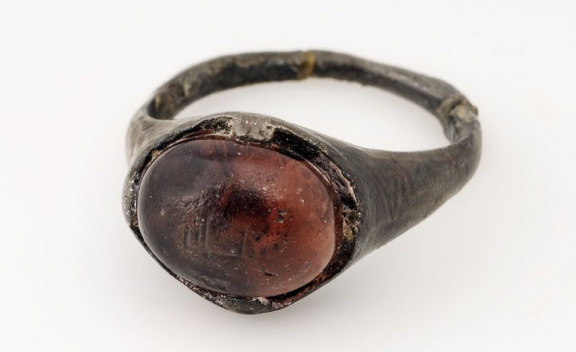
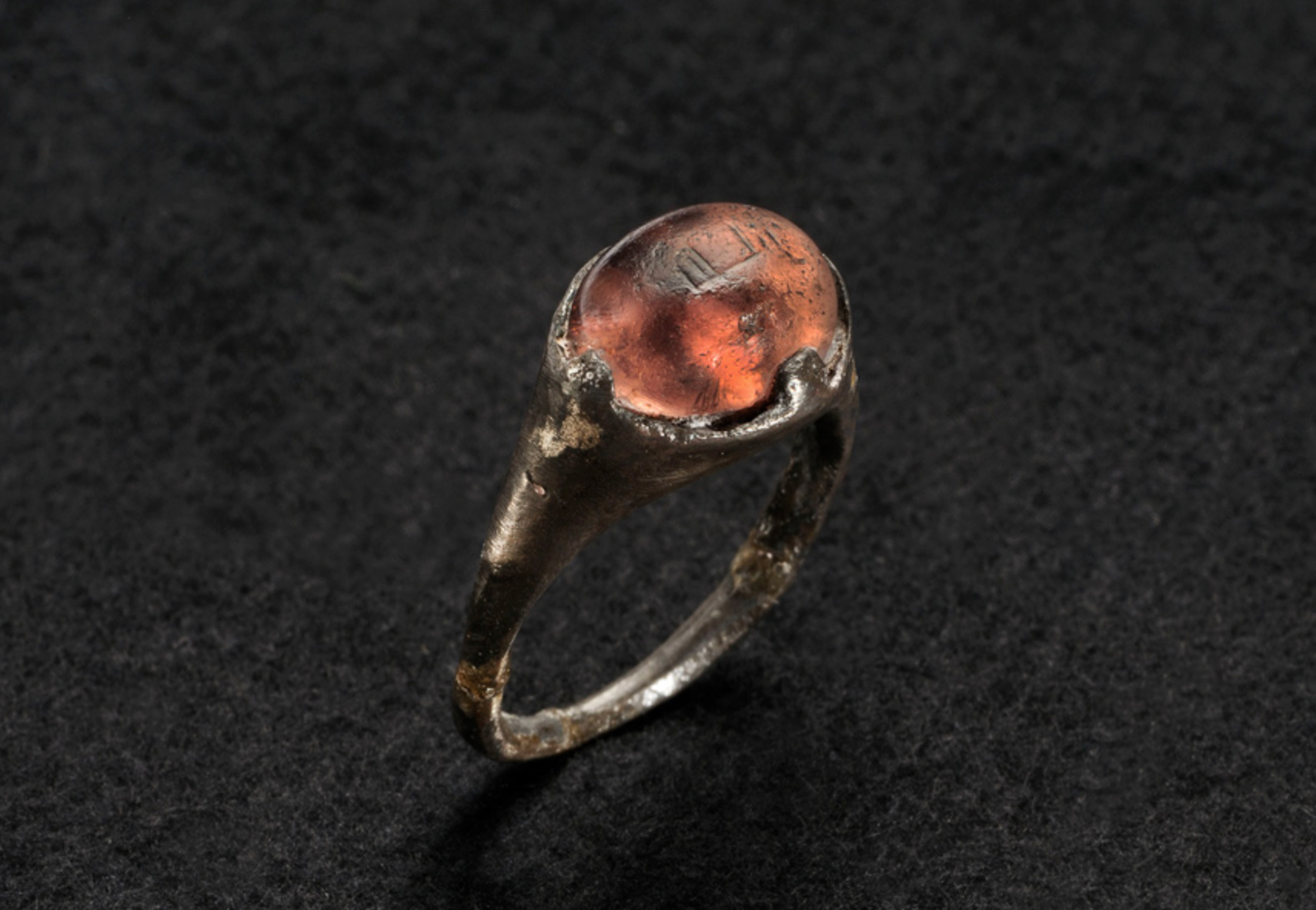
Researchers have identified a ring with an Arabic inscription found in the tomb excavations in Birka as a unique discovery in Scandinavian archaeological excavations. The ring was originally unearthed in the late 19th century in Birka, located on the island of Björkö, approximately 30 kilometers from Stockholm. Birka was a prominent trading center during the Viking Age and was inscribed on the UNESCO World Heritage List in 1993.
The ring, currently housed in the collection of the Swedish Museum of History, was initially described as being made of gilded silver with a purple amethyst stone and an inscription of "Allah." However, a recent study led by Sebastian Vermlander, a biophysicist from Stockholm University, employed scanning electron microscopy (SEM) with energy-dispersive X-ray spectroscopy (EDS) to analyze the composition of the ring. The findings revealed that the ring was actually crafted from a silver alloy, while the "amethyst" was identified as colored glass.
The researchers stress the importance of considering the historical context, noting that although colored glass may be perceived as a material of lower value or even "fake" in contemporary times, this was not necessarily the case in the past. They explain that while glass production originated in the Levant about 5,000 years ago, it remained an exotic material in Viking Age Scandinavia.
Furthermore, the researchers did not find any traces of the expected gold layer that was believed to have covered the ring. They also observed the presence of sawdust. The absence of gold on the metal surface and the presence of file marks indicate that the previous classification of the ring as gilded was mistaken. If the surface had been gilded and subsequently worn away, the file marks would have disappeared as well. However, since the original file marks remain intact and no signs of wear are present on the metal surface, it suggests that the ring was not extensively used.
The team speculates that the ring may have been passed down from an Arab silversmith to a woman, potentially changing hands among several owners over time. Alongside the ring, imported coins were found in the tomb, including many from Afghanistan. The researchers note that these coins typically display signs of wear and tear from multiple individuals along established trade routes, distinguishing them from the well-preserved condition of the ring.
The ring's owner, found in Birka, was discovered wearing traditional Scandinavian attire. However, due to the degraded state of the bones in the grave, the researchers were unable to determine her specific ethnicity.
The researchers propose the possibility that the woman herself or someone closely associated with her might have visited the Islamic Caliphate or neighboring regions, which extended from Tunisia to the borders of India during that time. However, ancient texts describing travels between the Islamic Caliphate and the Viking world often incorporate elements of mythology, including references to giants and dragons. This blending of fact and fiction makes it challenging to separate historical reality from legendary accounts.
The significance of the studied Birka ring lies in its potential to support the ancient legends that speak of direct contacts between Viking Scandinavia and the Islamic world. These contacts were believed to have facilitated the exchange of goods, culture, ideas, and news more effectively than indirect trade routes involving multiple intermediaries. The ring serves as a tangible artifact that provides evidence of the historical connections and interactions between these two distant regions during the Viking Age.