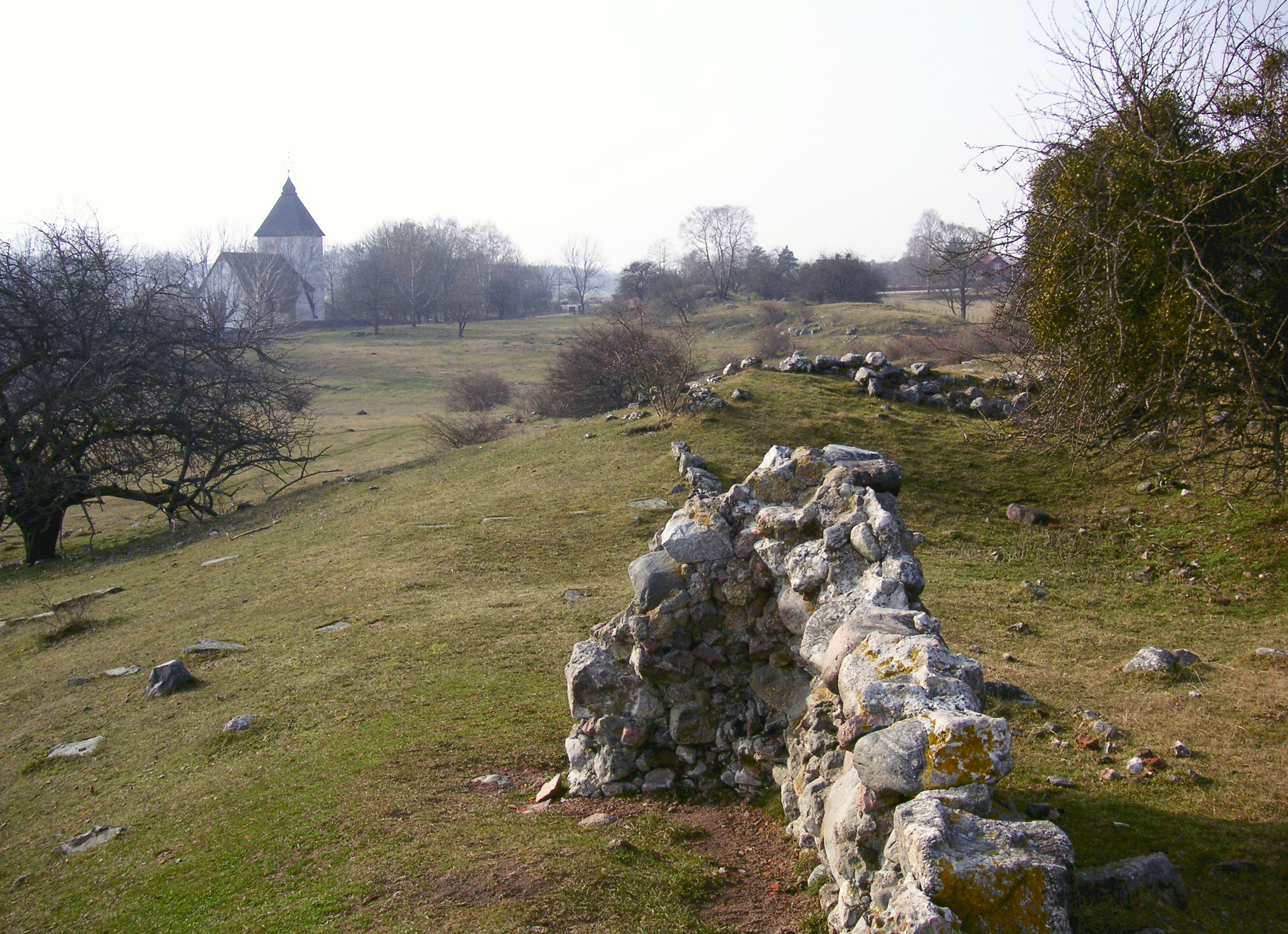



Hovgorden is an archaeological site located on Lake Mälaren, specifically on the island of Adelse in the municipality of Ekero in central-eastern Sweden. During the Viking Age, the thriving center of the Mälaren Valley was the settlement of Birka, founded in the mid-8th century and abandoned by the end of the 10th century. Birka was situated on the island of Björkö, south of Adelse. Hovgorden is believed to have been a place where kings and chieftains exercised authority. In 1993, both Hovgorden and Birka were designated as UNESCO World Heritage Sites.
Hovgorden is located in a plain northwest of the Romanesque church of Adelse and is characterized by a narrow rift valley stretching north towards the forested moraines. These historic meadows have been cultivated since the 19th century and have remained largely unchanged, with several well-preserved 18th-century farmyards as evidence.
The oldest archaeological findings on Adelse, situated north of Hovgorden, include burial fields and mounds dating back to the Bronze Age (around 1800-500 BC). This cultural heritage appears to have persisted into the Iron Age (500-800 BC), as graves from the early Iron Age have been discovered in various locations in the area. Hovgorden itself has yielded around 124 graves, ranging from the late Roman Iron Age (1-400 AD) to the early Middle Ages (approximately 1050-1520 AD), indicating continuous habitation throughout this period.
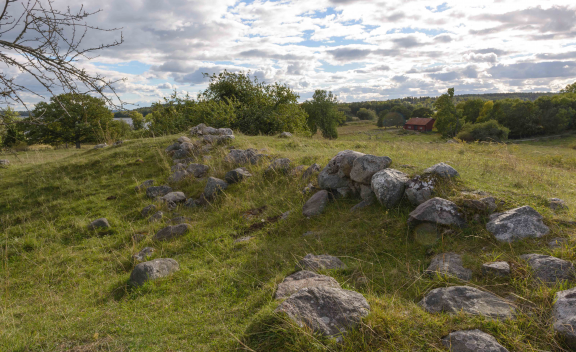
To the north of the parish church, five large barrows can be found, with three of them known as Kungshogar. In Swedish, "Kung" means king, and "högar" derives from the ancient Scandinavian word "haugr," meaning hill or mound. It appears that Hovgorden served as the royal estate of Kungsgard since the Viking Age (circa 800-1050 AD). During excavations of one of these royal mounds in 1917, the remains of an affluent individual who lived around 900 AD were discovered. This individual was cremated, laid in a boat, dressed in costly attire, but without weapons, and was accompanied by horses, cows, and dogs.
Birka, the oldest city in Sweden, played a significant role as an international trading center. It was believed that the royal settlement in Hovgorden was established to exercise control over Birka. However, despite Birka's abandonment in the mid-10th century, the royal estate does not appear to have continued functioning, as indicated by the presence of runic stone U 11, dated around 1070 AD and said to be carved for the king, which was placed near the royal mounds. This estate was part of Uppsala öd, a network of royal estates supporting Swedish kings.
Furthermore, King Magnus Barnlock replaced the old castle with a palace constructed from Alsnö Hus bricks in the 1270s. Within the palace, the king established the Swedish nobility through the Alsno Decree (Alsnö stadga) in 1279. Nevertheless, the palace was destroyed by the end of the same century, and as it fell into decline, Hovgorden lost its significance.