



Birka on the island of Björkö in modern Sweden, is an important Viking shopping center, which handles goods from Scandinavia and Finland, as well as Central and Eastern Europe and the East. Björkö is located on Lake Melaren, 30 km west of modern Stockholm, in the municipality of Eckero. The label was founded in about 750 AD and flourished for over 200 years. It was abandoned c. In 975 AD, around the same time, Sigtuna was founded as a Christian city about 35 km north-east. It was estimated that the population of Birka during the Viking Age was between 500 and 1000 people. The archaeological sites of Birk and Hovgorden on the neighbouring island of Adelso form an archaeological complex that illustrates the complex Viking Scandinavian trading networks and their impact on the subsequent history of Europe. Usually considered the oldest city in Sweden, Birka (together with Hovgorden) is a UNESCO World Heritage Site since 1993. The silver ring from the Viking Age tomb at Birka is the first ring with an Arabic inscription of that era found in Scandinavia. Birka was founded around 750 A.D. either by the king to control and expand trade, or originated from a seasonal trading place around. It was one of the first urban settlements in Scandinavia. Birka was the Baltic link on the river and the crossing of Ladoga (Aldeya) and Novgorod (Holmsgard) to the Byzantine Empire and the Caliphate of Abbasids. Tag was also important as the place of the first known Christian community in Sweden, founded in 831 by St. Ansgar. As a shopping center, Birka most likely offered fur and iron products as well as handicrafts in exchange for various materials from most of Europe and Western Asia. Furs were extracted from the Saami, Finns and residents of Northwest Russia, as well as from local hunters. Furs included bear, fox, marten, otter, beaver and other breeds. Deer antlers were an important exchange item, as were handmade combs made of horns. Walrus teeth, amber and honey were also exchanged.
Foreign items discovered in the tombs of Birka encompass a diverse range of objects, including glass and metal tableware, earthenware originating from the Rhine region, garments, and textiles, which notably include Chinese silk, Byzantine fine gold thread embroidery, brocade adorned with gold patterns, and high-quality wicker cords. Starting from the ninth century onward, coins produced in locations like Haitabu in northern Germany and other parts of Scandinavia began to make appearances. However, the predominant currency unearthed in Birka consists of silver dirhams from the Caliphate, with English and Carolingian coins being relatively scarce.
The primary sources of information about Birka primarily come from archaeological discoveries. No written texts from this region have survived. Nevertheless, a written text known as Vita Ansgari Rimbert, dating to around 865, provides an account of Ansgar's missionary endeavors in Birka around 830, and the Gesta Hammaburgensis Ecclesiae Pontificum (Acts of the Bishops of the Great Church), authored by Adam of Bremen in 1075, narrates the life of Archbishop Unni, who passed away in Birka in 936. St. Ansgar's mission marked the initial effort to convert the indigenous Scandinavian population from their native religion to Christianity, but it faced significant challenges and was ultimately unsuccessful.
The precise location of Birka had been lost over the centuries, leading to speculations among Swedish historians. However, in the "Chronicles of Sweden," dating back to around 1450, the island of Björkö was first referred to as Birka:
"In Sweden, there were three capitals, two of which were not far from Uppsala. One was called Sigtuna, and the other was Birka. Birka was situated on an island in Lake Mälaren known as Björkö. The third capital was located in West Götaland and was named Skara."
The search for Birka prompted Johan Hadorf, a national antique dealer, to conduct the first excavation attempts on Björkö in the late 17th century.
In the late 19th century, Jalmar Stolpe, an entomologist by training, arrived on Björkö to study fossilized insects preserved in amber found on the island. Stolpe discovered a significant amount of amber on the island, which was unusual because amber is not typically found in Lake Mälaren. This discovery led Stolpe to hypothesize that the island might have served as a crucial trading hub. Consequently, he initiated a series of archaeological excavations between 1871 and 1895. These excavations revealed the presence of a substantial settlement on the island, and Stolpe dedicated two decades to exploring Björkö thoroughly. Once it was established that Björkö was the site of ancient Birka, it was suggested that the original name "Birka" might have been simply "Bierkø" (sometimes spelled Bjärkö), an earlier form of "Björkö."
During the excavation process, a substantial collection of fabric fragments, primarily from chamber graves, was unearthed. Agnes Gageer conducted the most comprehensive analysis of this collection in 1938, although her research was based on only 5% of the 4800 fabric fragments that were preserved at the site. This collection showcases a typical variety of different types of textiles, highlighting the production of high-quality fabrics utilizing various techniques, such as striped fabric and twill. The quality of these fabrics, primarily crafted from wool and linen, was meticulously studied by Geyer, ranging from very coarse to fine fabrics with a significant number of yarns, which required intricate weaving techniques. Silk and other materials like gold and silver threads were less commonly found.
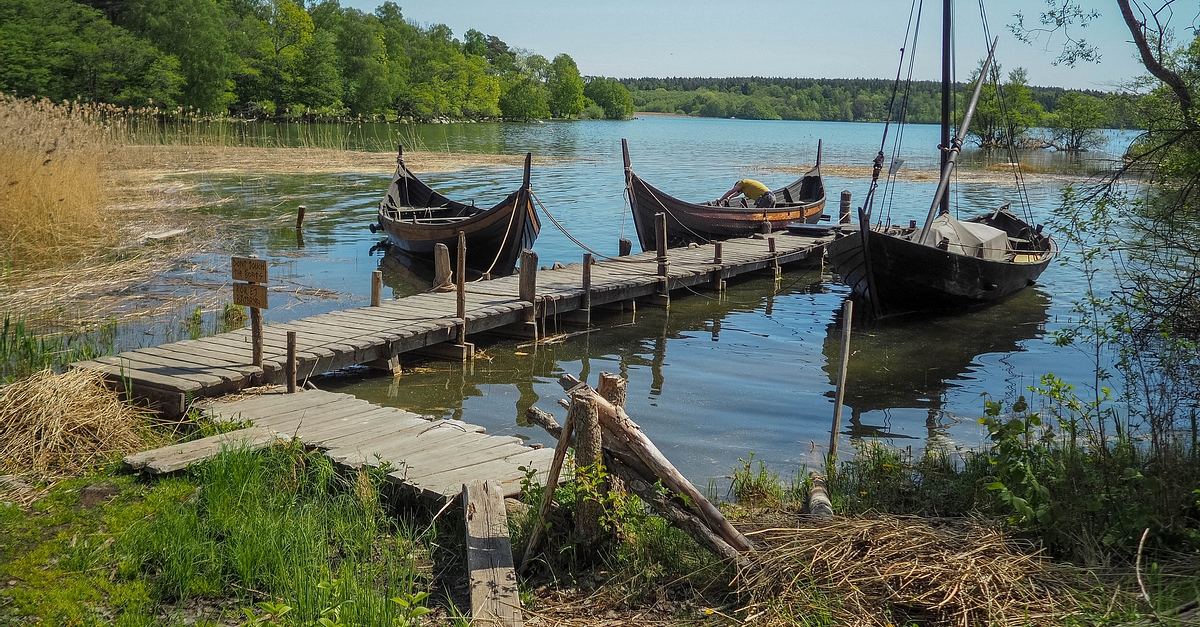
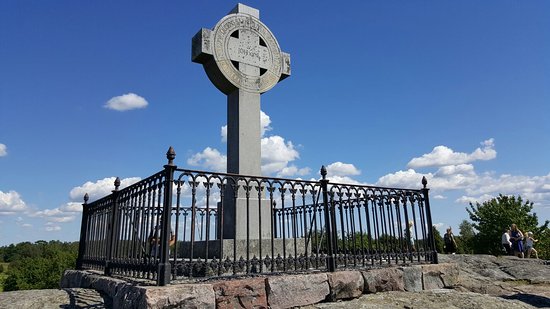
Presently, the ownership of Björkö is predominantly in private hands and the land is primarily used for agriculture. However, Björkö holds significance as an archaeological site, and a museum has been constructed nearby to exhibit various finds, mainly consisting of replicas, models, and reconstructions. It is a popular destination for visitors during the summer months. The comprehensive collection of archaeological artifacts from the excavations at Björkö is housed in the Swedish Historical Museum in Stockholm, where many of these artifacts are put on display for the public to see.
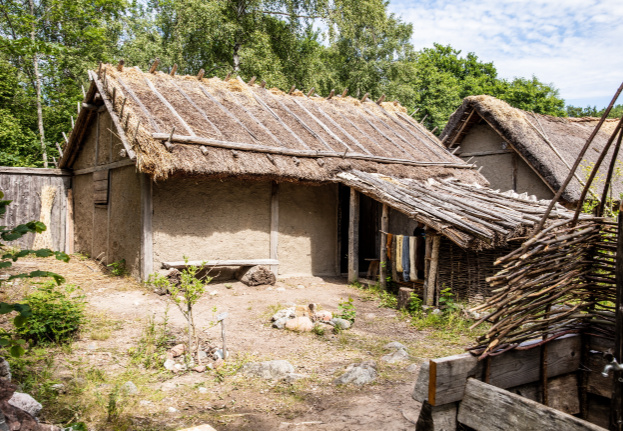
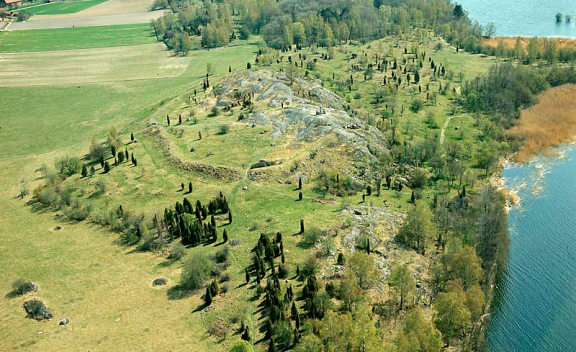
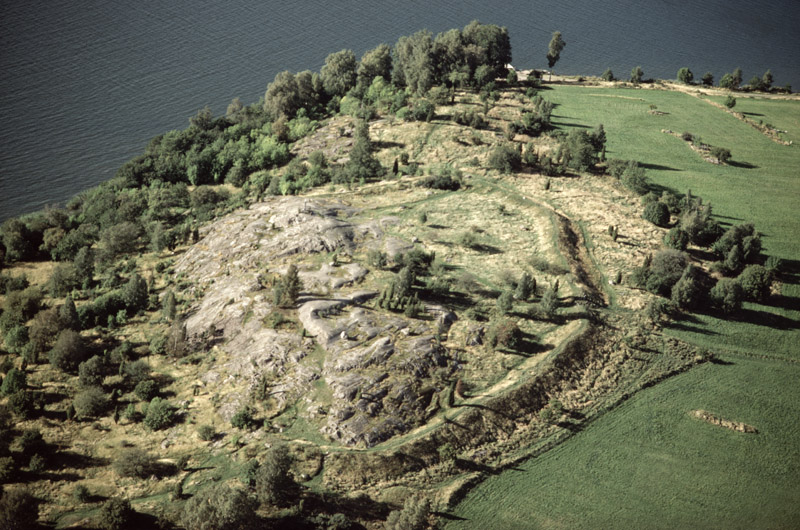
Archaeological excavations on Björkö are situated in the northern part of the island and encompass an area of approximately 7 hectares (17 acres). Within this region, there are remnants of both burials and buildings. In the southern section of this area lies an ancient settlement known as "Borgen" or "Fortress." The construction techniques of these buildings are still not fully understood, but wood was the primary material used in their construction. On a nearby island, one can find the remains of Hovgorden, an estate that once hosted the king's retinue during their visits.
At its zenith, Birka was inhabited by around 700 people, and approximately 3000 graves have been discovered on the island. The administrative hub of Birka was likely situated outside the settlement itself, on the neighboring island of Adelse.
The most recent significant excavations occurred between 1990 and 1995 in the area of dark soil, which is believed to have been the primary settlement site. Presently, Björkö is predominantly engaged in agriculture, and shipping companies offer tours to the island, allowing visitors to explore life during the Viking Age at the museum.