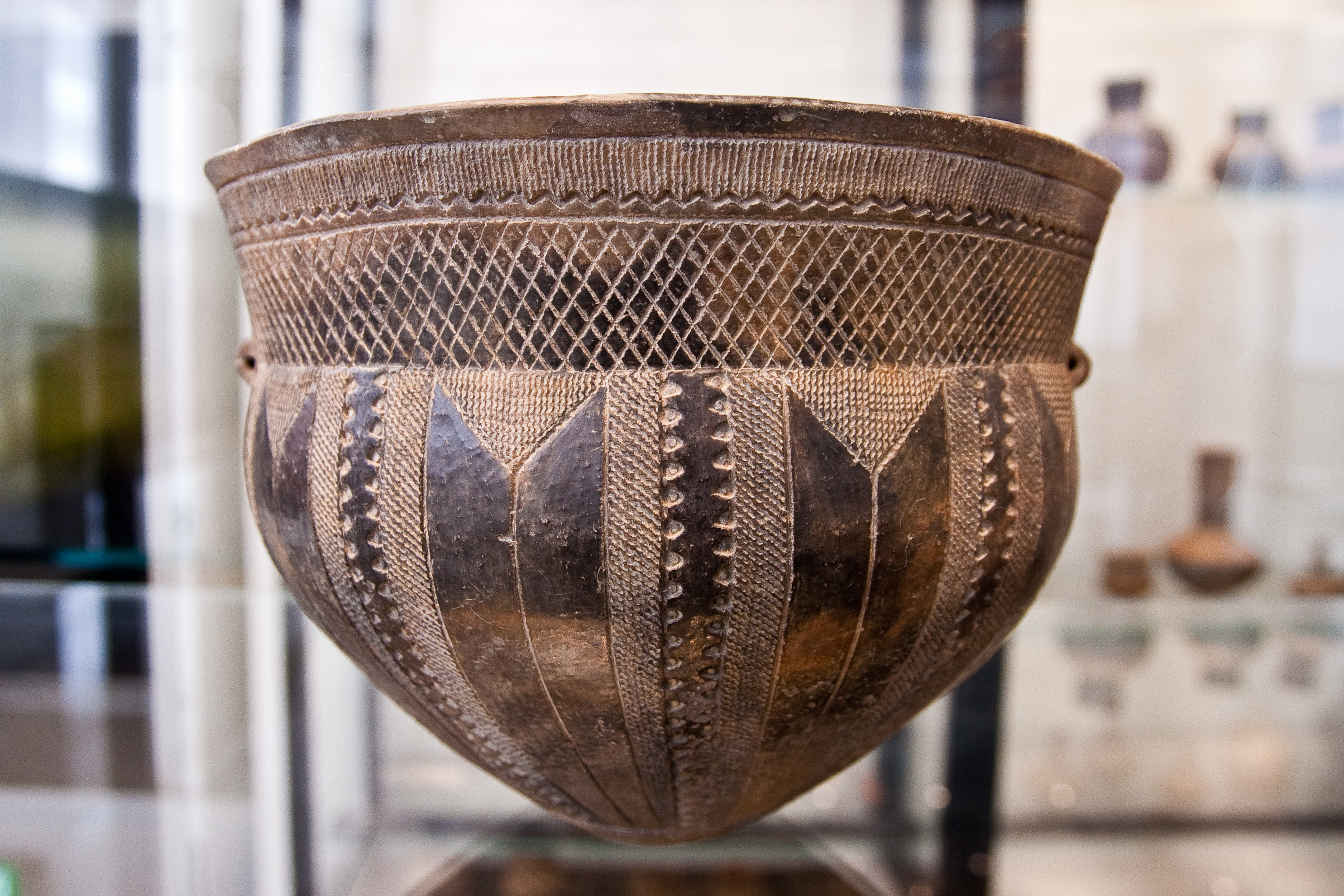


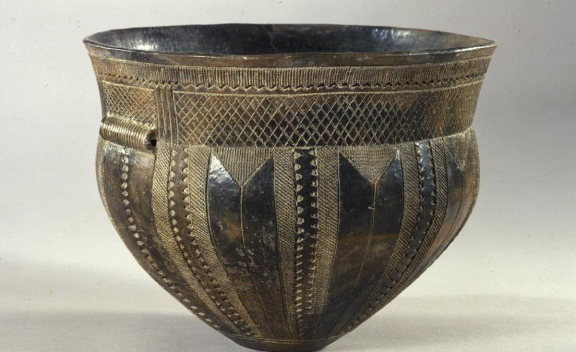
Some of the most exquisite prehistoric artifacts in Denmark are made from pottery, especially during the Stone Age when ceramics were crafted with elegant shapes and intricate patterns.
Pottery plays a crucial role in helping archaeologists date their finds. Stone Age pottery has been meticulously categorized based on its form and decoration. Ceramic vessels can be classified into different styles, each with distinct periods of use. These styles enable archaeologists to trace the evolution of pottery and determine the age of various pots.
One of the most renowned examples of Stone Age pottery is a vessel discovered in a burial mound near Skarpsolling in Himmerland, which dates back to around 3200 BC.
Good-quality clay was typically found along the banks of inland watercourses. To make the clay resistant to fire and heat, it was mixed with crushed granite. Potters constructed pots using thin "sausages" of clay, and the surface was then smoothed. Afterward, the vessels were decorated, with Neolithic pottery often featuring intricate and beautiful patterns. These patterns were impressed onto the vessel's surface using various tools, such as small sticks, shells, bones, or nails. Plant fiber cords were also employed in decoration. In later periods, patterns could be filled with a chalky substance that contrasted with the clay. Finally, the pots were fired at temperatures ranging from 500 to 700 degrees Celsius, most likely in a kiln or fire oven.
Throughout the Neolithic period, the shape and decoration of pottery evolved over time, resulting in different styles that can be accurately dated. While prehistoric pottery was traditionally rooted in conservatism and tradition, it was also influenced by changes and fashion trends. This adaptability makes pottery an invaluable tool for dating archaeological finds. Over a span of 600 years (from 3400 to 2800 BC), seven distinct stylistic phases have been identified.
It is not a coincidence that pottery production flourished concurrently with the advent of agriculture. As farming and animal husbandry became more prevalent, people needed containers like pots to store grain and dairy products. Pottery vessels were also in use at the end of the Mesolithic period, but they tended to be rougher and less varied in design. Various types of vessels were crafted during the Neolithic period, each with shapes and decorations likely carrying both symbolic and practical significance. Some ceramic vessels were left undecorated and were probably used for everyday household purposes. Others were richly decorated and often placed outside Neolithic burial mounds, likely serving as sacrificial vessels.