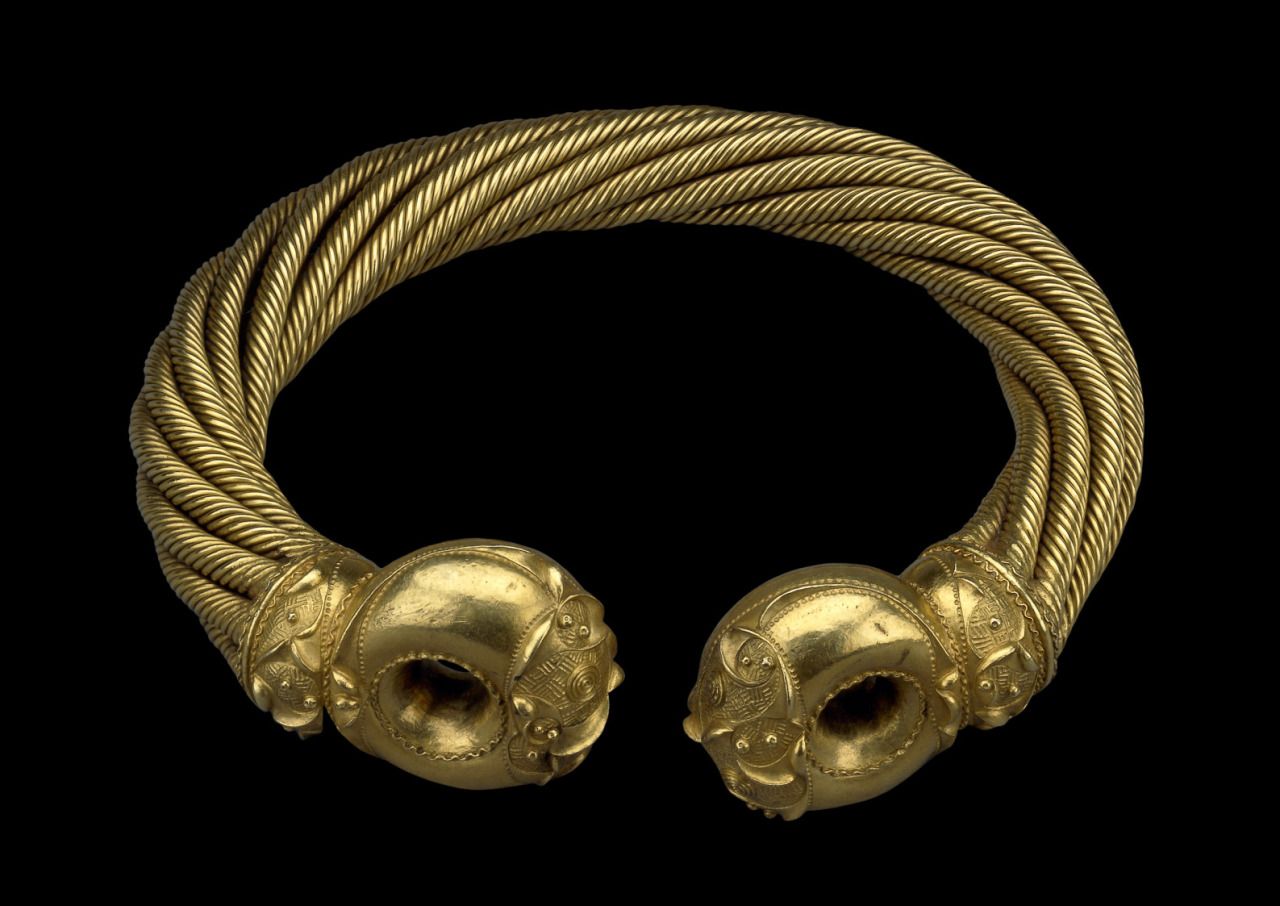


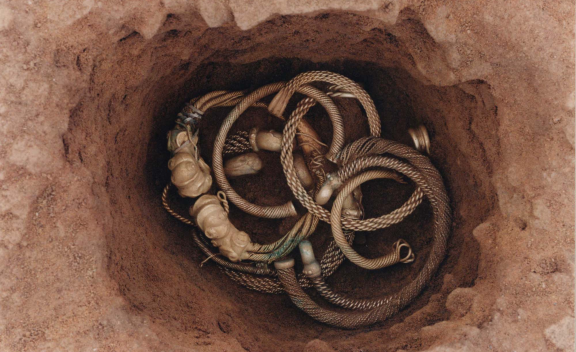
The Snettisham Treasure, also known as the Snettisham Hoard, is a collection of significant Iron Age discoveries made in the Snettisham area of Norfolk, England, spanning from 1948 to 1973. This treasure comprises various precious metals, jet, and more than 150 fragments of gold, silver, and copper alloy Torcs, with over 70 of them forming complete Torcs. These artifacts date from around 70 BC and are believed to be among the most notable archaeological finds associated with the Iceni tribe. The most famous piece from the hoard is the Great Torc of Snettisham, which is now housed in the British Museum.
Despite its exceptional quality and historical significance, the exact origin or provenance of the Snettisham Treasure remains unknown. However, the high quality of craftsmanship suggests that it was likely a royal or elite treasure associated with the Iceni.
Recent studies, including electron microscopic analysis conducted by the British Museum, have shed light on the Snettisham Torcs. These studies revealed patterns of cutter wear, metal chemistry, and cut marks that indicate deliberate destruction and modification of valuable objects. One hypothesis suggests that this intentional destruction may have been a form of vow offering, with the Torcs being ritually dismantled and offered as part of a religious or ceremonial practice.
The artifacts from the Snettisham Treasure are currently held in the Norwich Castle Museum and the British Museum. This remarkable hoard was ranked number 4 on the list of British archaeological finds in the 2003 BBC Television documentary "Our Top Ten Treasures," presented by Adam Hart-Davies. Similar specimens, such as the Torc from Sedgeford (found in 1965) and the Torc from Newark (found in 2005), as well as six ends from the Ipswich Hoard (discovered from 1968 to 1919), share characteristics with the Snettisham Torcs and provide further insights into this unique period of history.