





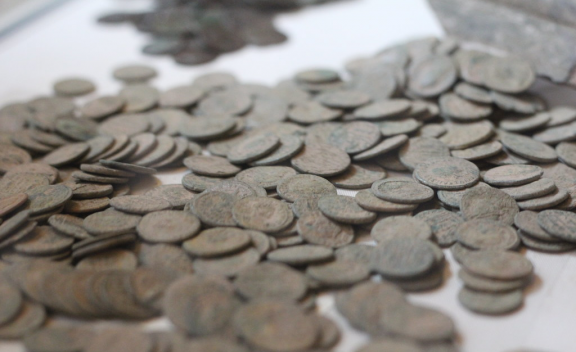
The Thornbury Treasure is a remarkable hoard of Roman coins consisting of 11,460 copper alloy coins. These coins are primarily radiates and nummi and date from the period between 260 and 348 AD. The hoard was discovered in Ken Allen Gardens in Thornbury, South Gloucestershire, England, in March 2004, during the excavation of a pond. It is described as "the third largest of its kind" ever found in Britain.
Ken Allen made the extraordinary discovery while digging a pond in his garden. The coins were found within a rough gray vessel decorated with ware, measuring approximately 40 to 50 centimeters (16 to 20 inches) in height. The vessel had suffered damage from the surrounding earth.
After uncovering the hoard, Ken Allen reported the find and took it to the Bristol City Museum and Art Gallery. The combined weight of the coins amounted to a staggering 28.6 kilograms (63 pounds), necessitating two men to lift the bucket containing the coins.
Following the discovery, the coroner officially declared the hoard as treasure, initiating a formal process to assess its historical and monetary value. An appraisal committee estimated its worth at £40,000. Subsequently, the Bristol City Museum and Art Gallery acquired the hoard with financial support from various sources, including the Heritage Lottery Fund, the Headley Museums Treasure Acquisition Scheme, and other organizational funds.
The Thornbury Treasure provides valuable insights into the Roman presence and economic activities in the region during the late Roman period, offering a fascinating glimpse into the past through its extensive collection of coins.