



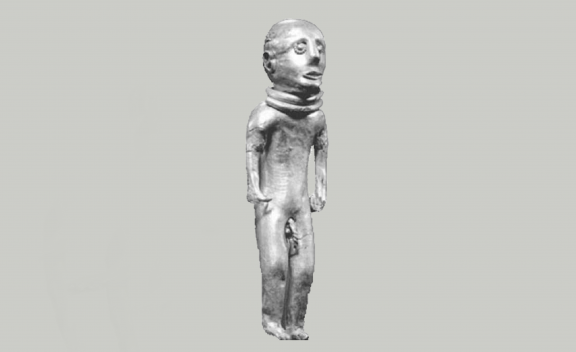
In 1981, an intriguing discovery was made in Slipshavn Skog, Nyborg, Denmark. It was a golden figurine adorned with double golden necklace-rings, believed to represent a chieftain. This remarkable find has been dated to the 6th century AD.
As time has progressed, additional discoveries of idols and figurines have further strengthened the connection between the practice of wearing ringed necklaces and the Northern cultures. One notable discovery is a suspected wooden idol from the 5th century AD, found in Rude Eskilstrup on the island of Zealand. This idol potentially signifies a continuity of the tradition associated with goddesses adorned with necklace-rings, a sacral symbol that dates back to the Bronze Age and Early Iron Age.
The golden figurine from the 6th century AD serves as compelling evidence that the wearing of gold rings was indeed a practice in the Northern regions during this period. These discoveries shed light on the cultural and religious significance of such jewelry and its continued relevance in the evolving societies of the North.