



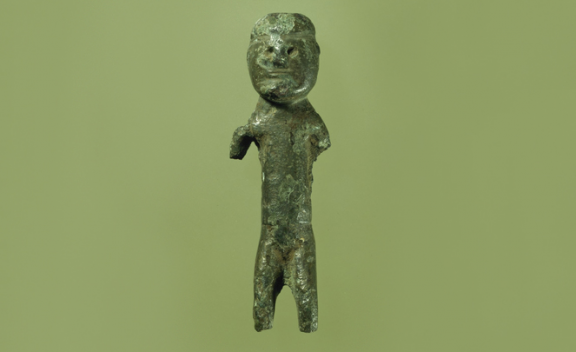
The small bronze figurines dating from the 3rd to 4th centuries AD are a fascinating archaeological discovery. These figurines, which are predominantly representations of men, are found individually in various locations, including settlements, lakesides, and marshes. However, the specific circumstances of their discovery are often unclear. Some of these metallic figures were even deposited in hoards meant for scrap metal, suggesting that they might not have been used as burial offerings.
These figurines exhibit a wide range of shapes and styles. Some are finely crafted and exhibit a high degree of detail, while others are more simplistic, lacking arms and legs, or appearing as just a head mounted on a long pin. Most of the male figurines are depicted as either naked or wearing a simple belt around their waist. Some may have additional jewelry in the form of wrist or neck rings.
A notable characteristic of these figurines is their distinctive facial features. They often have cap-shaped heads with hair parted in the middle and slicked down the sides. Many of them sport strong mustaches and pointed beards.
The identity and significance of these figurines remain a subject of debate among archaeologists and researchers. It is unclear whom these characters represent, but one possibility is that they could be depictions of gods or mythological figures. These intriguing artifacts provide valuable insights into the beliefs, culture, and artistic expressions of the people who created them during the 3rd to 4th centuries AD.