





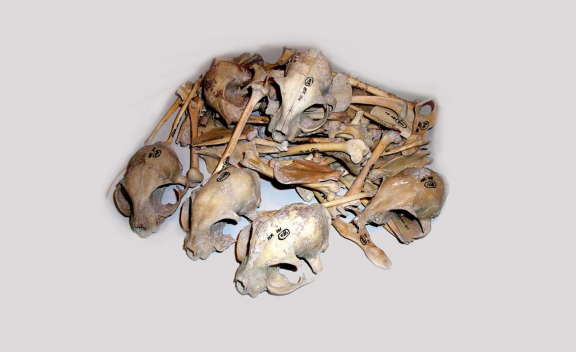
These cat bones, dating from the medieval period, likely spanning from the 13th to the 15th century, were discovered during excavations conducted by the archaeological section of the Winchester Museum Service on Victoria Road in Winchester during the mid to late 1970s.
A significant quantity of cat bones similar to these were found in some of the medieval pits at the Victoria Road site. Specialists in animal remains were able to determine the age at which the cats died by examining the degree of development of the bones, which was primarily between six and eleven months old. It was proposed that cats foraging in the medieval northern suburbs were frequently captured and killed for their hides and fur.
At this age, the cat was essentially mature, with its fur in good condition, but it was not yet cautious of humans and lacked the cunning to evade capture, unlike older cats might have. Interestingly, the absence of distinct cutting marks on the bones, aside from cuts on the head that likely occurred during the removal of the pelt, suggests that these unfortunate felines were not consumed as a meal afterward.