

Type of School/Style: Borre style
Historical Era/Civilization: Viking (Middle Viking Period)
Creation Date: Late 9th to 10th Century
Origin/Discovery Location: Europe, specifically Scandinavia, Sweden, Gotland
Materials Used: Silver
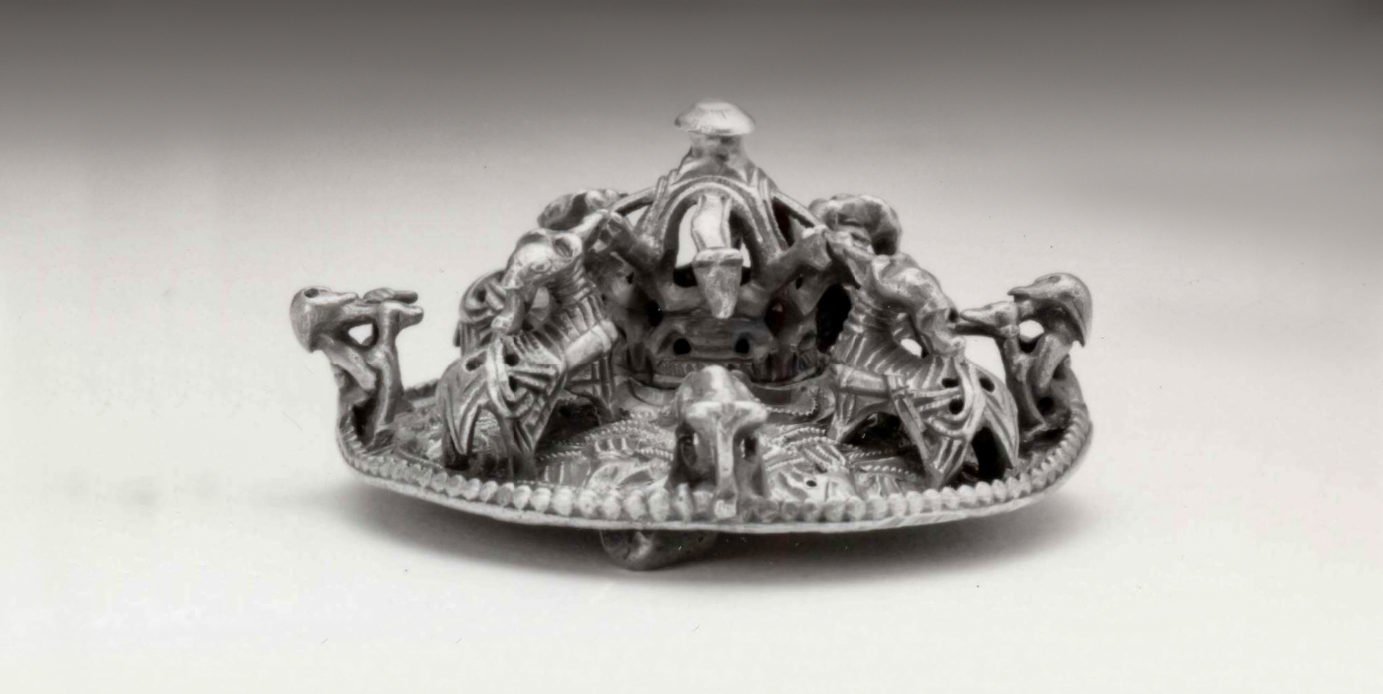
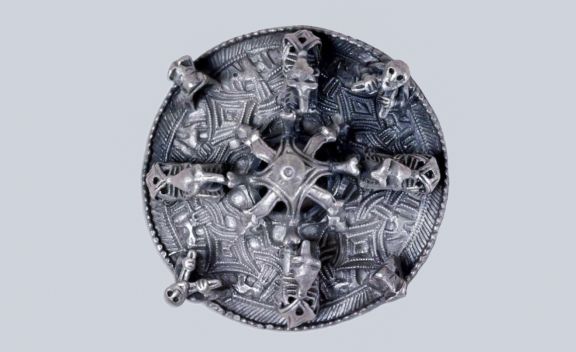
Description: This brooch is crafted in the distinctive Borre style of the Viking period. It takes the form of a cast silver disc that features intricate Borre-style lacework with three-dimensional depictions of animals and human figures. A central openwork bead and four freestanding quadrupeds are attached to the disc using rivets.
The plate of the brooch is adorned with a relief beaded border, within which runs a diagonal-stroke band with a beaded inner edge. The Borre-style zoomorphic design is notable for the presence of four mask-like heads positioned around the base of the central knob and eight heads in profile touching the border. All the decorative bands have a double outline with jagged edges to simulate beaded wire.
The openwork center handle includes eight protruding animal heads and is secured in place by a pair of rivets with ringed washers on the back of the brooch. The legs of the four free-standing quadrupeds pierce through the disc to secure them in place; these quadrupeds have their tongues extended to touch the back and openwork hindquarters.
Alternating with these quadrupeds are four inward-facing figures cast on the border of the brooch. Two of these figures depict squatting men with their hands passed under their knees turned outward. These figures hold forked beards protruding from beneath the chins of their pear-shaped faces. The other two figures represent animal heads on their front limbs, with raised paws holding a bar in their mouths. They have protruding ears and headgear.
On the reverse side, there is a cast textile impression of a lozenge-shaped twill pattern with a plain border. A U-shaped fastening with a silver pin clasp is located at the top, while a T-shaped fastener loop is positioned at the bottom. Additionally, one small casting defect on the disc has been patched, indicating repair or restoration work. This brooch exemplifies the exquisite craftsmanship and artistic style of the Borre style during the Middle Viking Period.