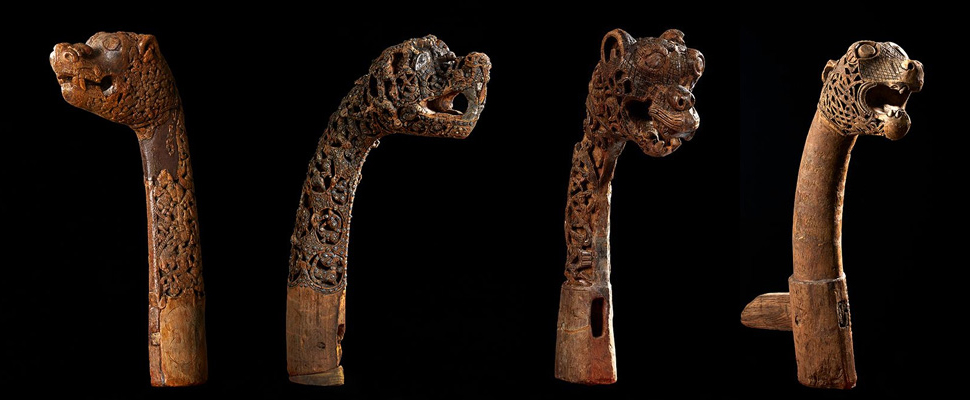


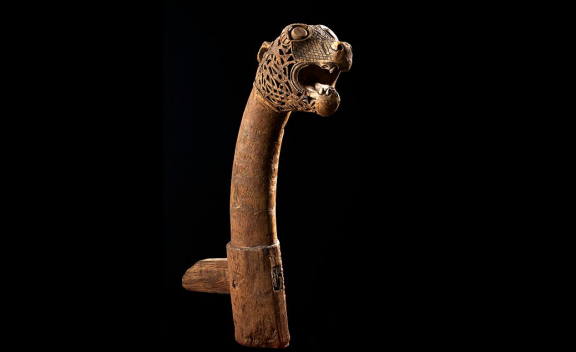
The Oseberg tomb's discovery of five intricately carved animal heads, with four on display at the Viking Ship Museum and the fifth in poor condition in the museum's vault, offers a glimpse into the craftsmanship of the past.
These animal heads were discovered in different locations within the tomb, with four of them found in the burial chamber and one on the fore deck. They were ingeniously tied together using a rope that was threaded through the mouth of one of the animal heads, functioning as a lead.
Creating these animal heads was undoubtedly a challenging and time-consuming task, even for experienced woodcarvers. The process involved venturing into the woods to select a suitable piece of hardwood with a natural bend from the lower part of a tree trunk. After selecting the wood, the carver would shape it and then begin the intricate carving process. Interestingly, it appears that these animal heads were crafted by different woodcarvers, as none of them resemble each other. Additionally, two of them are adorned with silver rivets, adding a level of sophistication to their design.
While the exact purpose of these animal heads remains a mystery, some clues suggest their potential uses. Each of the animal heads had a handle at the base of the neck, approximately 50 cm long. This suggests that they could have been attached to the outer walls of a house, a throne, or perhaps some other object or structure. The handles may have served a practical or decorative function, but their precise significance remains a subject of ongoing research and speculation.