




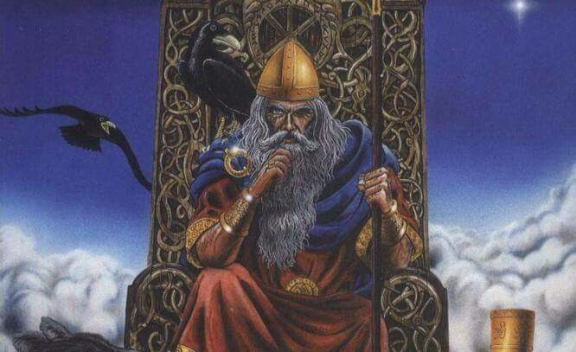
Hliðskjálf, pronounced approximately as "HLITH-skyahlf," with the "y" being a sliding vowel akin to the "y" in "few," is a significant vantage point in Norse mythology. It is a place from which the god Odin, and occasionally others, can observe everything that occurs in the cosmos.
The primary sources present some uncertainty regarding whether "Hliðskjálf" refers to a general location or a specific seat or throne within that location. This ambiguity is reflected in the name itself. The second element, "skjálf," is an obscure Old Norse word that appears to mean "steep slope," "crag," "turret," or "pinnacle." The first element, "hlið," signifies "opening" or "gap." Despite this ambiguity, the defining characteristics of Hliðskjálf are its elevation and expansive view. Therefore, the compound word "Hliðskjálf" essentially denotes a high place with a commanding vista, even if the precise nature of this place remains unclear.
Odin is renowned as one of the two preeminent practitioners of the magical art of seidr among the Norse deities, with the other being the goddess Freya. Seidr primarily involves acquiring enhanced and divinatory perception, a state that Odin achieves while situated on or at Hliðskjálf. Interestingly, seidr rituals are frequently conducted from the tops of raised platforms known as "seiðhjallr." This connection strongly suggests that Hliðskjálf serves as the archetypal seiðhjallr, the divine prototype upon which all such platforms constructed for human use are based.
In any case, Hliðskjálf plays a crucial role in the rich symbolism that the ancient Norse employed to illustrate Odin's extraordinary insight, knowledge, and wisdom. It stands as a representation of his ability to see and comprehend the workings of the cosmos from a vantage point that grants him unparalleled understanding.