






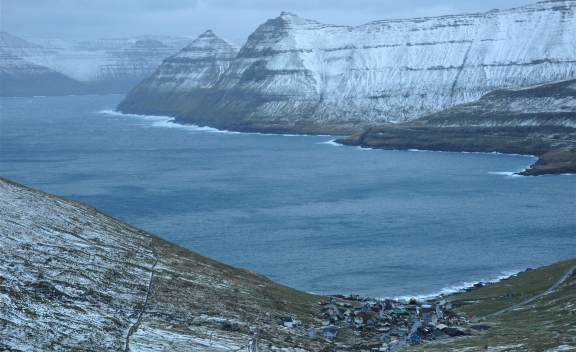
The Faroe Islands represented the first predominantly uninhabited lands in the North Atlantic Ocean to be reached by the Vikings during the primary westward phase of their expansion. These islands, which rise abruptly from the ocean, are positioned approximately halfway between northern Scotland and eastern Iceland.
According to an account by an Irish monk in 825, the Faroe Islands had been inhabited by Irish monks for generations, but they left the islands when the pagan Norse settlers arrived, an event that was already established by that time. The Norse settlers named these islands the "Færeyjar," which translates to "Sheep Islands." Given the absence of trees on the islands, the settlers constructed their homes using turf and rocks. The islands' economy relied heavily on livestock and the harvesting of marine resources, particularly fish, whales, and various bird species.