

The first Vikings to lay eyes on North America, according to the sagas, were led by a man named Bjarni Herjolfsson and his crew. They were blown off course while attempting to reach Greenland but did not set foot on the land. Instead, they turned back to Greenland when the weather improved.
Shortly after the settlement of Greenland, believed to have occurred in the late tenth century, Erik's son, Leif Eriksson, known as "the Lucky," was inspired by Bjarni's account and decided to embark on a voyage to explore this western land. His motivation may have been driven by the need to find resources like wood, which were scarce in Greenland's harsh environment.
Leif and his crew initially set foot on North America at a place they called Helluland, which translates to "Flat Stone Land." This was likely Baffin Island, situated off the northeastern coast of Canada, known for its mountainous terrain and glaciers. From there, they sailed south to Markland, likely the Labrador coast. Continuing southwest for two more days, they reached Vinland, or "Vine Land." Vinland appears to have encompassed the modern-day region from Newfoundland to New Brunswick, covering the coastal areas around the Gulf of St. Lawrence in eastern Canada. Leif and his crew spent the winter in Vinland before returning to Greenland in the spring. In the following years, other Vikings retraced his route and attempted to settle in this new land, but all were eventually driven out by the indigenous peoples after staying for no more than a few years.
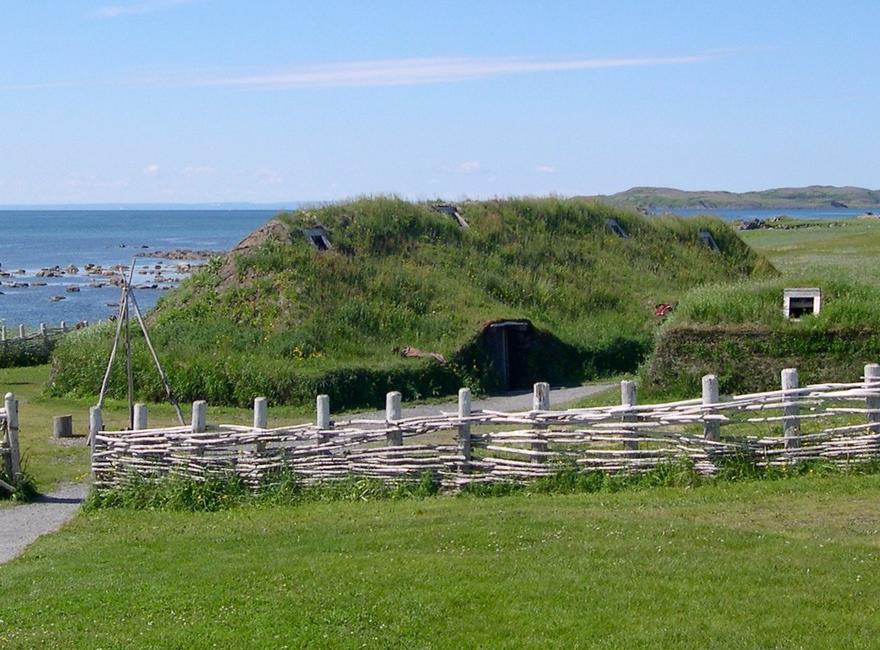
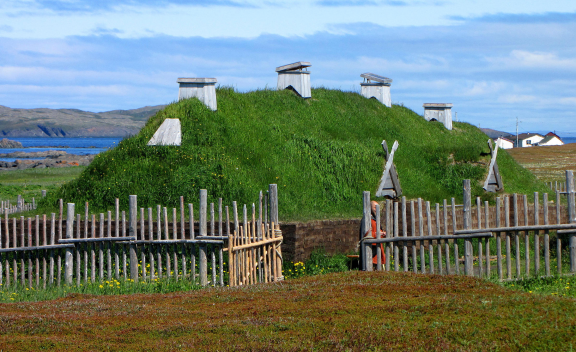
Despite the relatively short duration of their presence, the Vikings who reached North America left archaeological evidence of their activities. Two Viking sites have been discovered on Newfoundland: one at L'Anse Aux Meadows near the island's northern tip, and another further south and west. It is highly likely that the Vikings also made efforts to settle elsewhere along the northeastern coast of North America. However, if they did, any remains of their settlements would have disappeared over time with the arrival of subsequent European settlers in many of the same areas.
Interestingly, a late Viking Age Norwegian coin was found in an indigenous settlement in present-day Maine, in the United States. This discovery raises questions about whether the Vikings attempted to settle in the region or if it resulted from trade between the indigenous group and others further north. Therefore, it does not provide conclusive evidence of the Vikings reaching as far south as Maine.