



Blog
CATEGORIES
CATEGORIES
View all articles Ancient sites and archeological discoveries Artifacts of the viking gods Concepts Daily life in the viking age Dwarfs Giants and giantesses Mythological creatures Norse symbols Other locations Runes Scandinavian Sagas Servants in Norse mythology The Conquest Geography The Great Vikings The nine worlds in norse mythology Travel advices Viking beasts Viking Goddesses Viking Gods Viking holidays Viking ships and boats Viking weapons and armor
30.05.2021
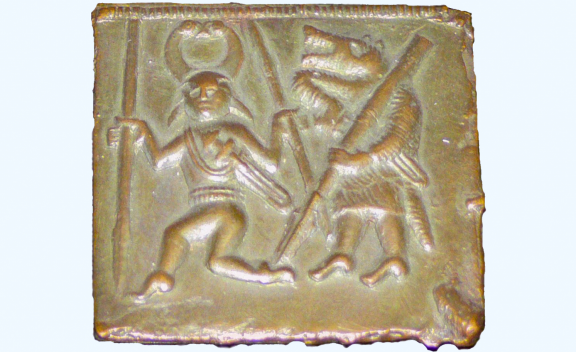
Odin figurine The Odin figurine and related artifacts provide intriguing insights into the representations of Odin, the Norse god, during the 6th to 7th centuries. One significant piece of evidence for identifying Odin comes from the discovery of four cast bronze stamps in Torslund in 1870. These...
view 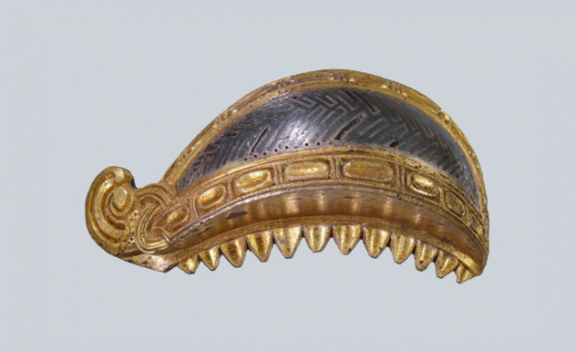
29.05.2021
Eyebrow arch around 600 AD The eyebrow arch, made of gilded bronze and adorned with angular inlaid niello (black engraving), is a component that was once part of a splendid helmet from the Vendelian period, which spanned from approximately 550 to 750 or 800 AD. This period is known for its distinctive artistic...
view 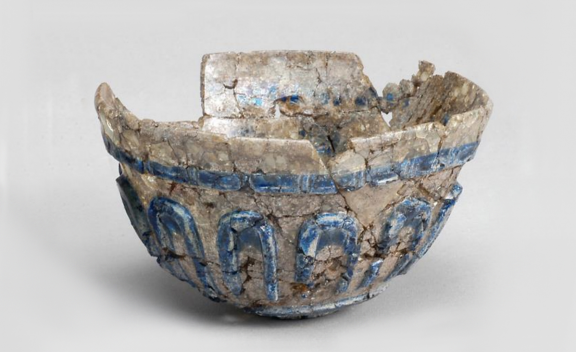
28.05.2021
Glass bowl 500 AD The glass bowl in the lidded technology is a remarkable artifact with an interesting history. This technique involves the application of a layer of blue glass onto a clear glass bowl, followed by sanding to reveal only the lotus pattern and trim, creating an intricate design. The...
view 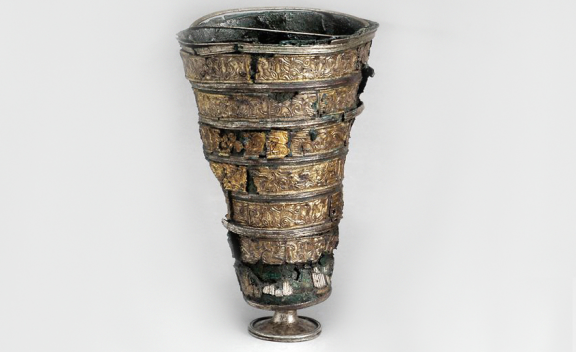
27.05.2021
Chalice 500 AD The magnificent silver bowl adorned with gold bands is a remarkable archaeological find. It was discovered in a ceremonial house in Uppåkra, and its presence suggests that it likely played a role in rituals before being buried in the ground. The gold bands on the bowl are...
view 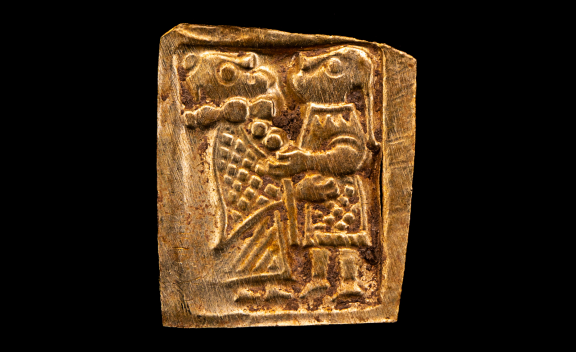
26.05.2021
Gullgubber Gullgubber are remarkable artifacts from the Nordic Iron Age found in Scandinavia. These objects are typically small, thin pieces of hammered gold (sometimes silver), measuring around 1 to 2 square centimeters (0.16 to 0.31 square inches). They are adorned with stamped motifs and are...
view 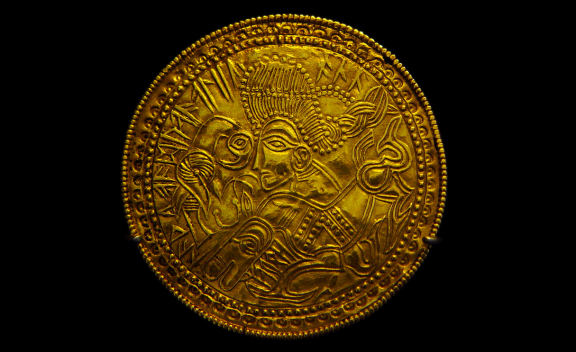
25.05.2021
Funen Bracteate The bracteate from the island of Funen in Denmark is part of a fascinating group of over a thousand similar artifacts. These bracteates draw inspiration from commemorative gold medallions that were originally minted for Roman emperors. The presence of these Roman-style medallions in...
view 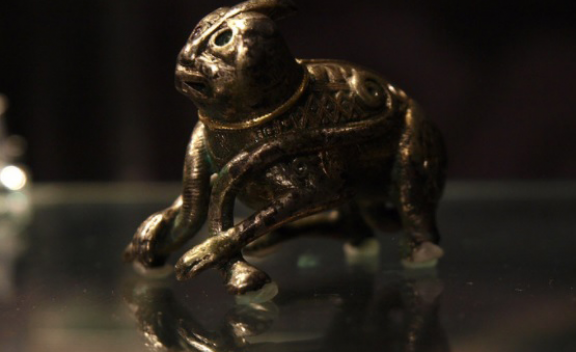
21.05.2021
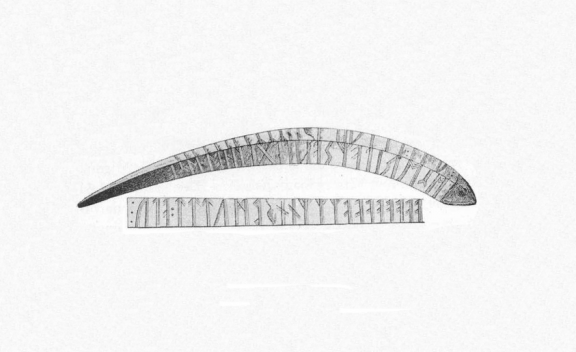
Lindholm Amulet The Amulet of Lindholm, designated as DR 261 in the Rundata catalog, is a unique piece of bone art dating from the late Roman Iron Age, specifically from the 2nd to the 4th century. This bone artifact is carved in the shape of a rib and bears runic inscriptions. It measures...
view 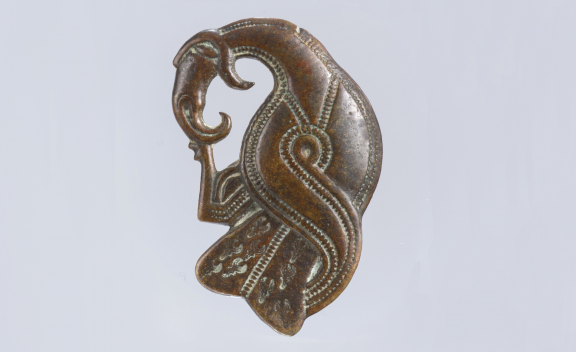
20.05.2021
Brooch in Form of a Bird of Prey The elegant bird depicted on this brooch features its head and right leg in a leftward profile, while its rounded body and fluttering tail face forward. The elongated right wing curves behind the tail. The neck, wings, and tail edges, as well as the upper part of the leg, are adorned...
view 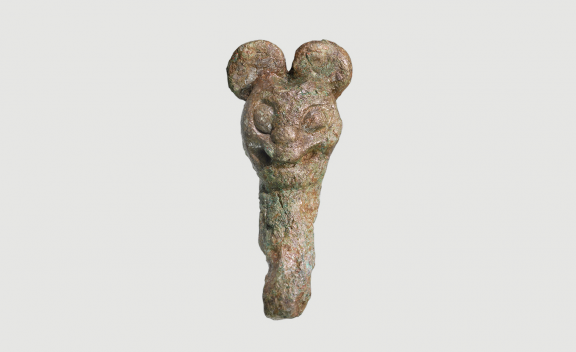
19.05.2021
Costume Buckle (Uppakra) This small figurine, crafted between 850 and 950 AD, is believed to be a costume needle or possibly part of an awl or tweezers. It is thought to have been created with the intention of imitating a lion, which was an early Christian symbol often employed by those in positions of...
view