




Blog
CATEGORIES
CATEGORIES
View all articles Ancient sites and archeological discoveries Artifacts of the viking gods Concepts Daily life in the viking age Dwarfs Giants and giantesses Mythological creatures Norse symbols Other locations Runes Scandinavian Sagas Servants in Norse mythology The Conquest Geography The Great Vikings The nine worlds in norse mythology Travel advices Viking beasts Viking Goddesses Viking Gods Viking holidays Viking ships and boats Viking weapons and armor
19.07.2021
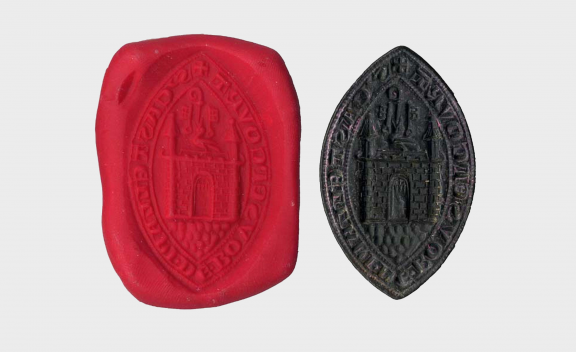
Seal matrix This pointed oval copper alloy seal, dating back to the medieval period, circa the late 13th or 14th century A.D., was discovered with a metal detector in Meonstock, Hampshire, in 2002. The seal bears a design that leaves a distinct impression in red sealing wax. Its central field...
view 
18.07.2021
Iron shears The artifact in question is a pair of medieval scissors, discovered on the grounds of Hyde Abbey in Winchester, Hampshire, in 1895. During the medieval period, scissors were more common than shears and served a variety of purposes in domestic and industrial settings. Smaller scissors,...
view 
17.07.2021
Copper alloy sewing ring This is a copper alloy sewing ring, dating back to the late medieval period, specifically the 14th to 15th century. It was discovered during an excavation conducted by the Winchester Excavation Committee in the Brooks area of Winchester in the late 1960s. What sets this sewing ring...
view 
16.07.2021
Silver denarius of the emperor Hadrian This copper alloy sewing ring is a relic from the late medieval period, dating back to the 14th-15th century. It was unearthed during an excavation conducted by the Winchester Excavation Committee in the Brooks area of Winchester during the late 1960s. Unlike thimbles from later...
view 
15.07.2021
Antler comb, Winnall, Winchester This is an intricately adorned comb from the Roman era, specifically from the 4th or early 5th century AD. It was discovered within an inlaid bone box that had been carefully placed in the grave of a young woman. The primary part of the comb features decorative rings and dots, while...
view 
14.07.2021
Bone inlaid box This object, originating from the Roman era and dating to the 4th or early 5th century AD, was discovered during excavations conducted by the Archaeological Section of the Winchester Museum Service at St. Martin's Close, Winnall, Winchester, in 1984-1985. When found in the grave...
view 
13.07.2021
Silver hairpin This exquisite hairpin, featuring a head in the form of a floating duck, hails from the Roman era, specifically from the 4th or early 5th century. It was discovered during excavations carried out by the Archaeological Section of the Winchester Museum Service at St. Martin's Close...
view 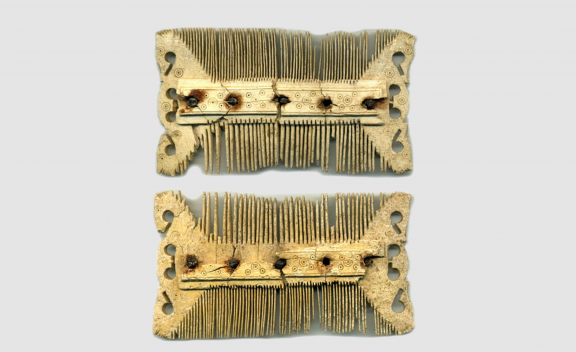
12.07.2021
Antler comb This intricately adorned comb originates from the late 4th or early 5th century AD and was discovered during excavations conducted by the Archaeological Section of the Winchester Museum Service at Hyde Street, specifically in the old SCATS building, in 1979. The comb was found in the...
view 
12.07.2021
Enamelled dragon shaped brooches These two dragon-shaped enamel brooches made of lead metal belong to the Roman era, dating approximately from 70 to 120 AD. They were unearthed during excavations conducted by the archaeological section of the Winchester Museum Service on Victoria Road, Winchester, in the mid to late...
view 
10.07.2021
Bronze mirror This mirror is believed to be from the Roman era, likely dating to the 2nd century AD. It was unearthed during excavations conducted by the archaeological section of the Winchester Museums Service on Victoria Road, Winchester, during the mid to late 1970s. The mirror was discovered...
view