



Blog
CATEGORIES
CATEGORIES
View all articles Ancient sites and archeological discoveries Artifacts of the viking gods Concepts Daily life in the viking age Dwarfs Giants and giantesses Mythological creatures Norse symbols Other locations Runes Scandinavian Sagas Servants in Norse mythology The Conquest Geography The Great Vikings The nine worlds in norse mythology Travel advices Viking beasts Viking Goddesses Viking Gods Viking holidays Viking ships and boats Viking weapons and armor
29.06.2021
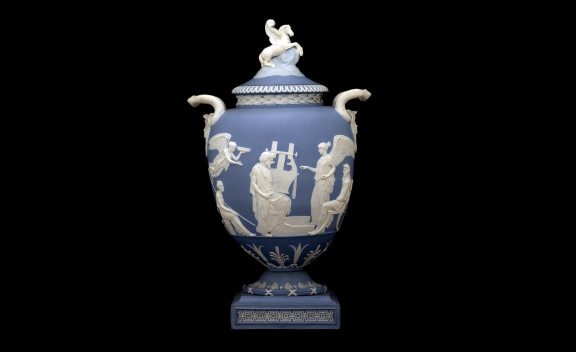
Pegasus Vase The Pegasus Vase is a remarkable piece of art characterized by its exquisite craftsmanship and materials. The body of the vase is crafted from pale blue jasper, while the relief decorations, handles, and Pegasus motif are made of white jasper. Jasper, in this context, refers to...
view 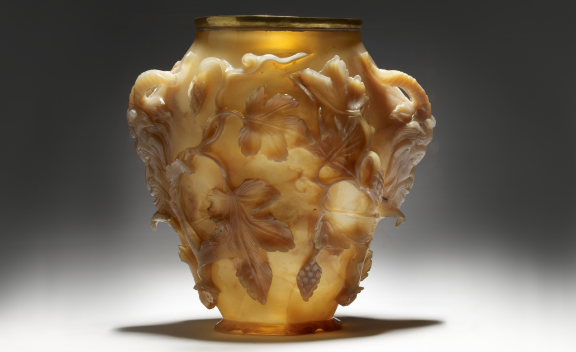
28.06.2021
Rubens Vase The Rubens Vase is a remarkable artifact dating back to late Antiquity or early Byzantine times. Carved from a single piece of agate, it takes the form of a vase and is named after its later owner, the renowned artist Peter Paul Rubens, who created a pen drawing of it in Flanders...
view 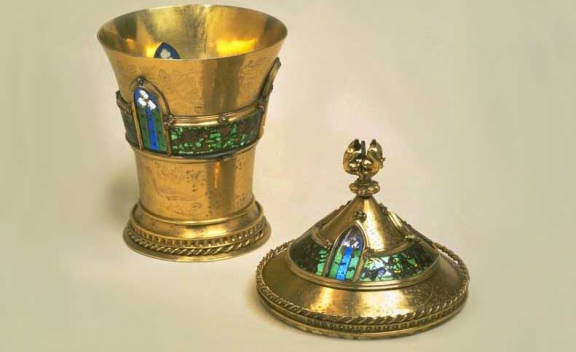
27.06.2021
Merode Cup The Merode goblet is a medieval silver-gilt cup adorned with intricately engraved depictions of birds, fruits, and vine leaves. It was crafted in the Burgundy region of France around the year 1400 and is named after the ancient Belgian Merode family, who were its previous owners....
view 
26.06.2021
Royal Gold Cup The Royal Gold Cup, also known as the St. Agnes Cup, is a magnificent gold goblet lavishly adorned with enamel and pearls. Crafted during the late 14th century for the French royal family, it later passed through the hands of several English monarchs before spending nearly three...
view 
25.06.2021
Whetstone, from Sutton Hoo The object you've described appears to be a stone scepter or sharpening stone with intricate metalwork. Here's a breakdown of its features: 1. **Stone Bar**: The main body of the object is a four-sided bar made of hard, fine-grained gray stone. The stone bar has a tapered...
view 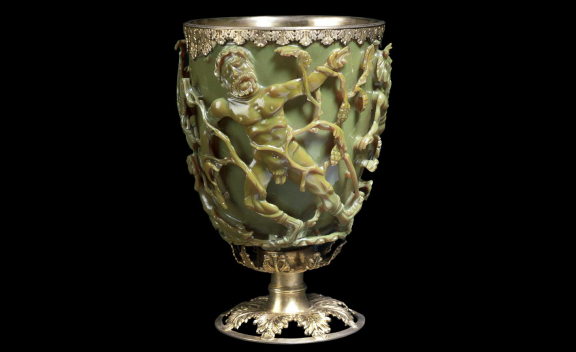
24.06.2021
The Lycurgus Cup The Lycurgus Cup is a remarkable 4th-century Roman glass goblet known for its unique optical properties. It is made of dichroic glass, which means it can change color depending on how it is illuminated. When lit from behind, the glass appears red, while when lit from the front, it...
view 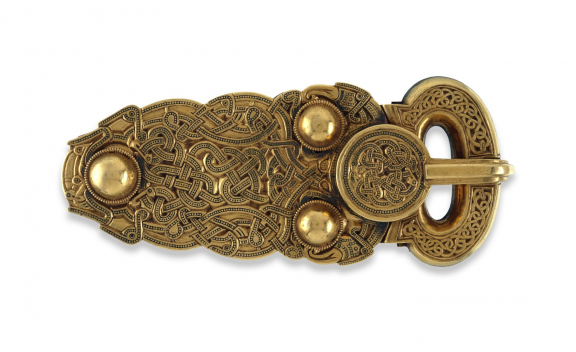
23.06.2021
Gold belt buckle from the ship burial at Sutton Hoo The gold buckle from the ship burial at Sutton Hoo is a remarkable and elaborate piece of early Anglo-Saxon craftsmanship, signifying wealth and high status in early Anglo-Saxon England. Buckles during this period were not only practical accessories but also served as symbols of...
view 
23.06.2021
The Sutton Hoo helmet The Sutton Hoo helmet is an extraordinary Anglo-Saxon artifact discovered in 1939 during the excavation of a ship burial at Sutton Hoo. This helmet, believed to have been buried around 625 AD, is closely associated with King Redwald of East Anglia. It is a remarkable piece of both...
view 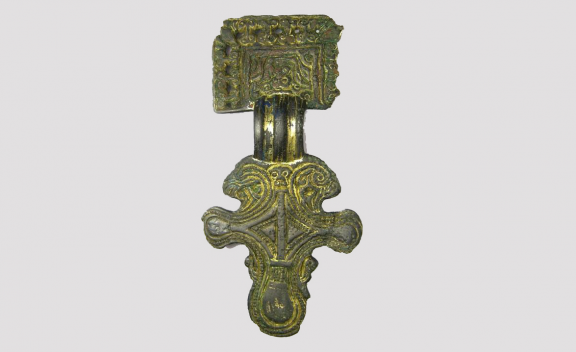
20.06.2021
Anglo-Saxon Square headed Brooch The described artifact is an impressive Anglo-Saxon brooch dating back to approximately the 6th century. It is crafted from copper alloy and measures 126.81 mm in length. This large brooch features a square head and showcases various elements of early Anglo-Saxon art, particularly...
view 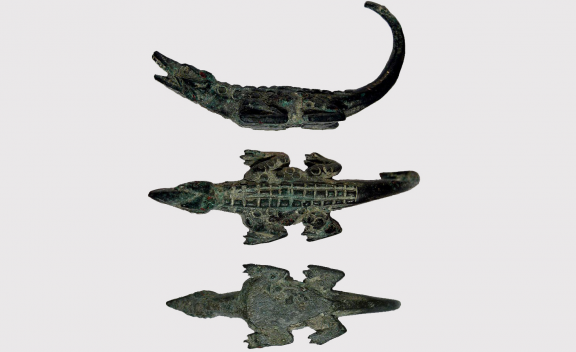
20.06.2021
Crocodile figurine of Roman date The artifact you describe is a zoomorphic figurine in the shape of a crocodile, made of copper alloy. It is a finely crafted representation of a crocodile with detailed features, including its neck, head, tail, and legs. The crocodile's tail curves upwards, reaching a maximum...
view