



Blog
CATEGORIES
CATEGORIES
View all articles Ancient sites and archeological discoveries Artifacts of the viking gods Concepts Daily life in the viking age Dwarfs Giants and giantesses Mythological creatures Norse symbols Other locations Runes Scandinavian Sagas Servants in Norse mythology The Conquest Geography The Great Vikings The nine worlds in norse mythology Travel advices Viking beasts Viking Goddesses Viking Gods Viking holidays Viking ships and boats Viking weapons and armor

19.06.2021
Lewis chessmen The Lewis Chessmen, also known as the Whig Chessmen, are a group of remarkable chess pieces and other gaming components, primarily carved from walrus ivory. They date back to the 12th century and are among the most distinctive artifacts of medieval chess sets. These chess pieces were...
view 
18.06.2021
Franks Casket The Casket of Franks, also known as Auson's casket, is a small whalebone casket from the early 8th century that is currently housed in the British Museum. It is important for its intricate decoration, which consists of knife-carved narrative scenes in flat two-dimensional relief...
view 
17.06.2021
Seated Buddha Statuette in the Oseberg Ship The Oseberg ship was discovered in a large mound near Oseberg Farm, Westfold County, Norway, in 1904. It is considered one of the most well-preserved and intriguing Viking ship finds, despite having been looted during the Middle Ages, with its burial site dating back to 834 AD. Thieves...
view 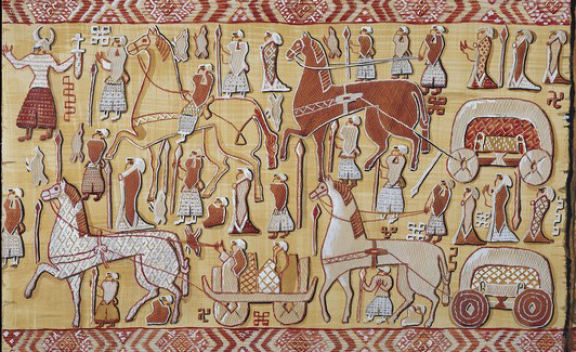
16.06.2021
Tapestry of the ship Oseberg, 834 AD. On August 6th, 1903, a farmer by the name of Oskar Rom unearthed a mound located on his property at the Lille Oseberg farm in Slagen, within the county of Vestfold, Norway. In this mound, he made an intriguing discovery that appeared to be remnants of a ship. Following this discovery,...
view 
15.06.2021
Altuna Runestone (early 11th century) The Altuna Runestone (Altunastenen), listed as U 1161 in the Rundata catalog, is a Viking memorial runestone adorned with images from Nordic mythology. It is located in Altuna, Uppland, Sweden. The Altuna Runestone is a granite stone standing at a height of 1.95 meters (6 feet 5...
view 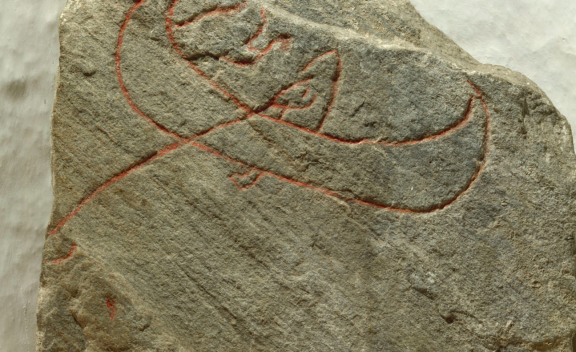
14.06.2021
Hordum stone (8th - 11th century) The Hørdum Stone is a Viking painting stone that was discovered in Hørdum, Tystede, in the Northern Denmark region. This stone depicts a legendary scene from Scandinavian mythology involving the god Thor and the serpent Jörmungandr, also known as the Midgard Serpent....
view 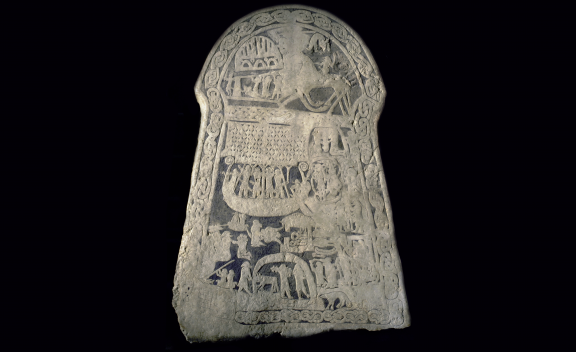
13.06.2021
Andre VIII stone (8th century) The Ardre image stones are a collection of ten runic and stone image stones dating from the 8th to the 11th centuries. These stones were discovered in Ardre church, located in Ardre, Gotland, Sweden. The primary edition of these stones was conducted by Suna Lindqvist. Historically,...
view 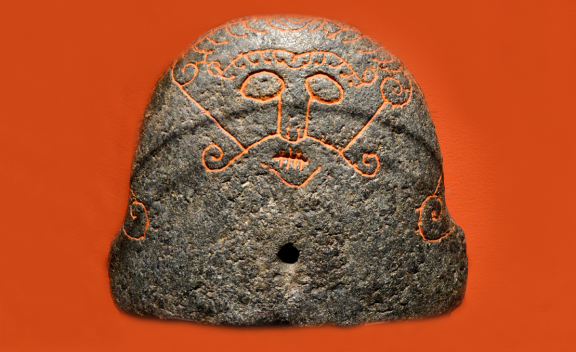
12.06.2021
Snaptun Stone The Snaptun Stone is a significant historical artifact that features a rare depiction of Loki, the Norse trickster god. This stone, discovered on the western border between Norway and Sweden, was carved around the year 1000 AD. It portrays Loki with his lips pressed together, a detail...
view 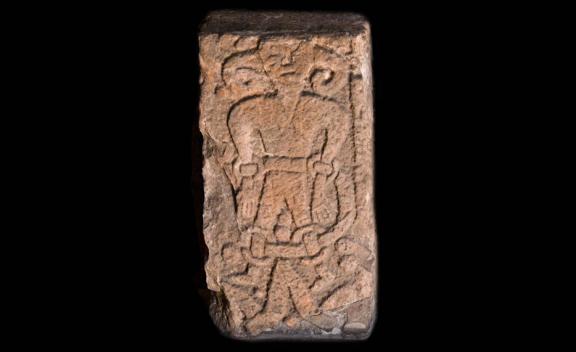
11.06.2021
The Loki Stone, Kirkby Stephen The Loki Stone is a remarkable 8th-century carved image of the Norse god Loki, depicted in a bound and chained form. It is one of only two known carved figures of this type in Europe and the sole one in Britain. The presence of the Loki Stone in Kirkby Stephen serves as a reminder of...
view 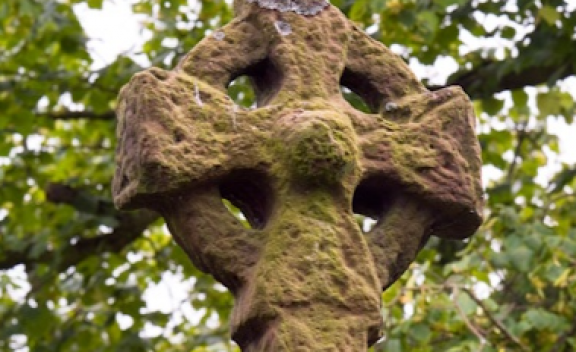
09.06.2021
Gosforth Cross The Gosforth Cross is a notable Anglo-Saxon stone cross located in the churchyard of St. Mary's in Gosforth, Cumbria, England. Dating back to the first half of the 10th century AD, this cross holds significance for its unique combination of Christian and Nordic symbols, reflecting...
view