



Blog
CATEGORIES
CATEGORIES
View all articles Ancient sites and archeological discoveries Artifacts of the viking gods Concepts Daily life in the viking age Dwarfs Giants and giantesses Mythological creatures Norse symbols Other locations Runes Scandinavian Sagas Servants in Norse mythology The Conquest Geography The Great Vikings The nine worlds in norse mythology Travel advices Viking beasts Viking Goddesses Viking Gods Viking holidays Viking ships and boats Viking weapons and armor
08.08.2021
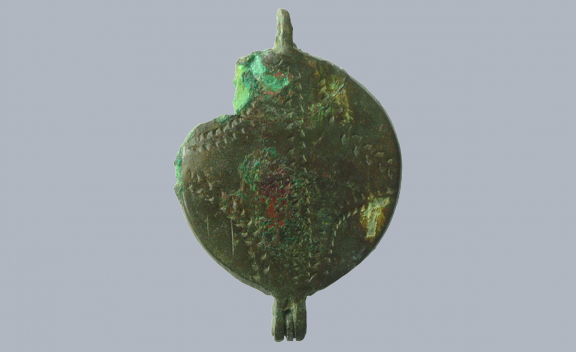
Mirror case of copper-alloy This artifact, dating from the medieval period, specifically the mid-13th to 15th century, was uncovered during excavations in the 1970s at the archaeological section of Winchester Museum on Victoria Road in Winchester, Hampshire. The remaining part of this object is the mirror body,...
view 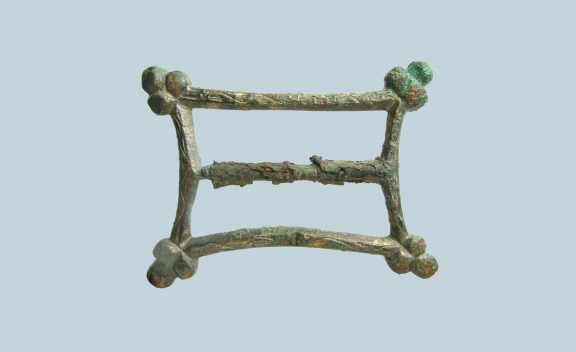
07.08.2021
Copper-alloy buckle This intricate and rather ornate large buckle, dating from the medieval period, possibly between the 13th and 15th centuries, was unearthed during archaeological excavations carried out in the 1970s at the Winchester Museum's archaeological section on Victoria Road in Winchester,...
view 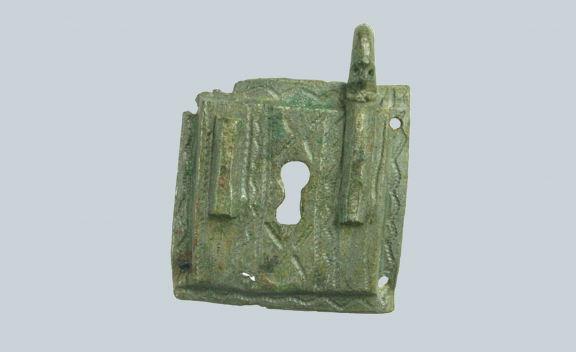
06.08.2021
Plate for a lock of copper-alloy Dating back to the medieval era, possibly from the 13th to the 14th century, this artifact was discovered in the 1970s during an excavation of the archaeological section of the Winchester Museum on Victoria Road in Winchester, Hampshire. Locks and keys uncovered during archaeological...
view 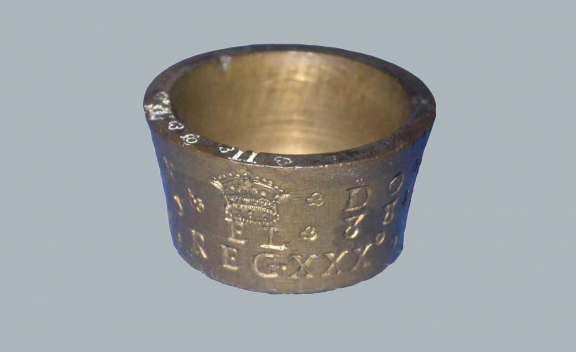
05.08.2021
Weights and Measures The City of Winchester is fortunate to possess the oldest surviving set of standard weights, the most ancient standard yard measure, and a valuable collection of other ancient measurement tools. These standard weights and measures were employed for quantifying the merchandise sold, as...
view 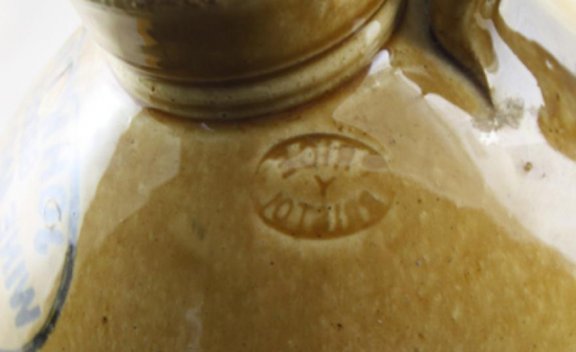
04.08.2021
Nineteenth Century Utilitarian Stoneware Stoneware is a type of ceramic that undergoes high-temperature firing, typically above 1200-1400 degrees Celsius. This intense heat causes the clay to vitrify, making it impermeable to liquids even without a glaze. This was a significant advancement compared to ceramics fired at lower...
view 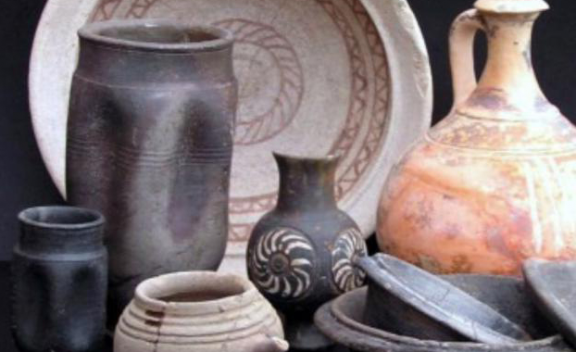
03.08.2021
Roman New Forest Pottery During the third century AD, within the context of Roman Britain, the New Forest area became a significant center for pottery production. The region had been cultivated and cleared from the Late Neolithic period onwards. Over time, soil quality declined, making it less suitable for...
view 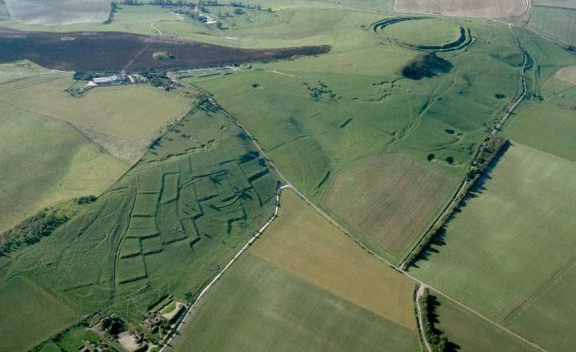
02.08.2021
A Bronze Age cremation cemetery The excavation that began in 1966 at Calis Corner, Kimpton, was a significant archaeological discovery made possible by the landowner, William Flambert, who had a lifelong interest in archaeology and recognized the importance of the site. The plowing of the field repeatedly uncovered...
view 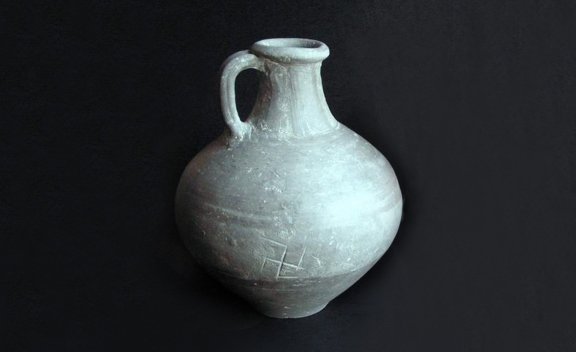
01.08.2021
Roman grey-ware flagon The gray ware jug discovered at Manor Farm in Hurstbourne Priors, Hampshire, is an intriguing archaeological find that likely dates back to the Roman era, specifically around 200-279 AD. This type of jug was created in the kilns located in Alice Holt, near Farnham in Surrey. The jug...
view 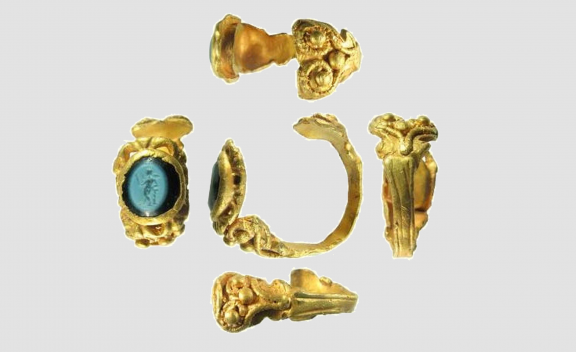
31.07.2021
Cupid ring This late Roman gold ring, discovered two years ago at Tangley, north of Andover, holds significant historical and artistic value. It qualifies as "treasure" according to the definition outlined in the Treasure Act, and its registration, appraisal, and publication were...
view 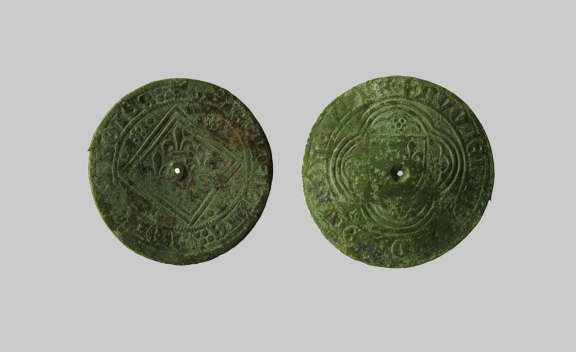
30.07.2021
Jetton This copper alloy disk, dating from the late medieval period between 1480 and 1500, was discovered at the Evans Halshaw site, located on Hyde Street in Winchester, Hampshire, during archaeological excavations conducted by Wessex Archaeology in the early 2000s. While this disk appears...
view